Powell’s City of Books
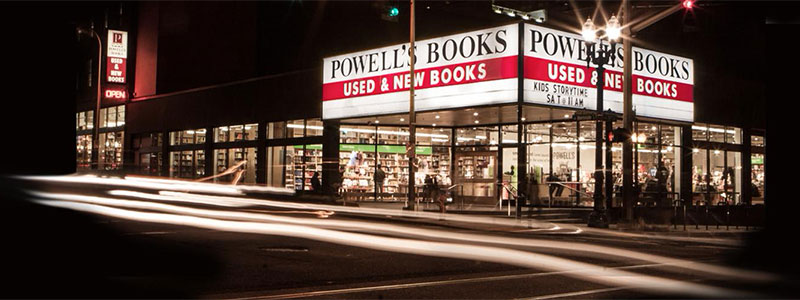
Powell’s says it is the world’s largest independent book store, and it may well be. They claim to have a million books under roof at their flagship location, in a building occupying a city block. The store is in downtown Portland, with lots of homeless folks wandering outside. Many of the businesses have security folks outside their doors.
We explored for an hour or so, with lots of used books on the shelves alongside new. Jim found a couple of useful genealogy books (never available in a new book shop) and Deb found some light reading.
Neighborhood food tour
Today we took a walking tour of the Kerns neighborhood in northeast Portland. We started kale and avocado with salads at a Cuban restaurant (Pambiche), accompanied by cafecito and Jamaica hibiscus tea, both very yummy. We tasted pistachio schmear at Montelupo, which also has its own market. We ate sushi crab roll and a pina colada at Tropicale. We went through Providore, another foodie market, where we bought some lovely low salt blue cheese. We had a buckwheat savory crepe with ham and arugula at one of the many food pods (parking lots now rented to food trucks) in the city. We finished with sorbet and gelato at Gelato Staccato.
Clearly, Portland excels in great food, walkability and diversity of food. Our tour guide was Sherri of https://portlandbymouth.com/. along the way, she pointed out neighborhood architecture, gave the history of the restaurants and generally celebrated her adopted city. Quite fun!
Back to familiar wineries
Over the past couple of weekends, we have visited wineries that we first met last summer from The Dalles. Each is quite a drive, but the wine is fantastic and we get a case price break as members of their wine club.
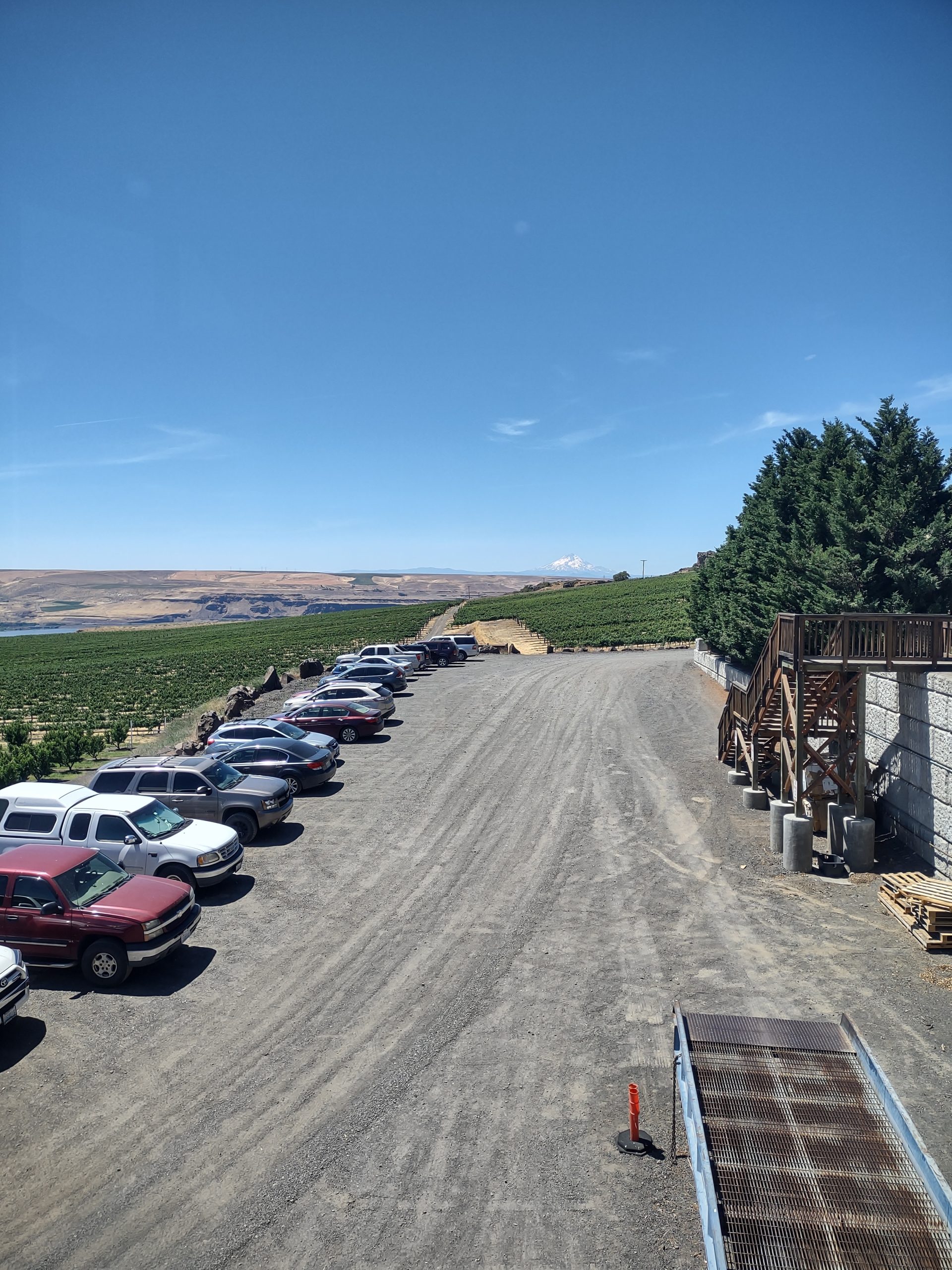
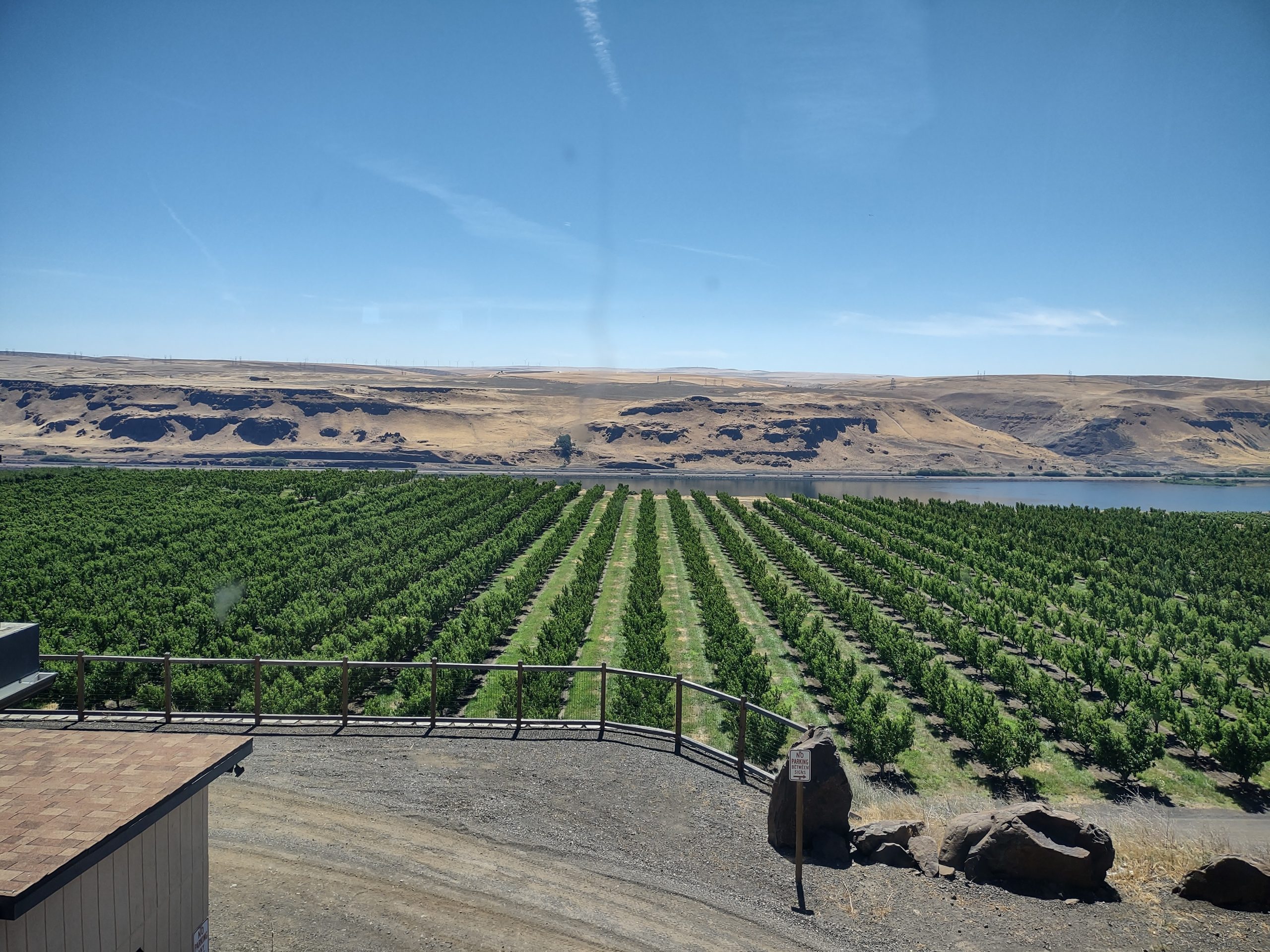
In July, we drove to Maryhill Winery in Goldendale, WA. Situated on the bluffs above the Columbia River, it has a commanding view. Deb tasted their whites and Jim snifeed each one (he was driving). Came home with rosé of sangiovese, chardonnay, petit verdot and sangiovese.
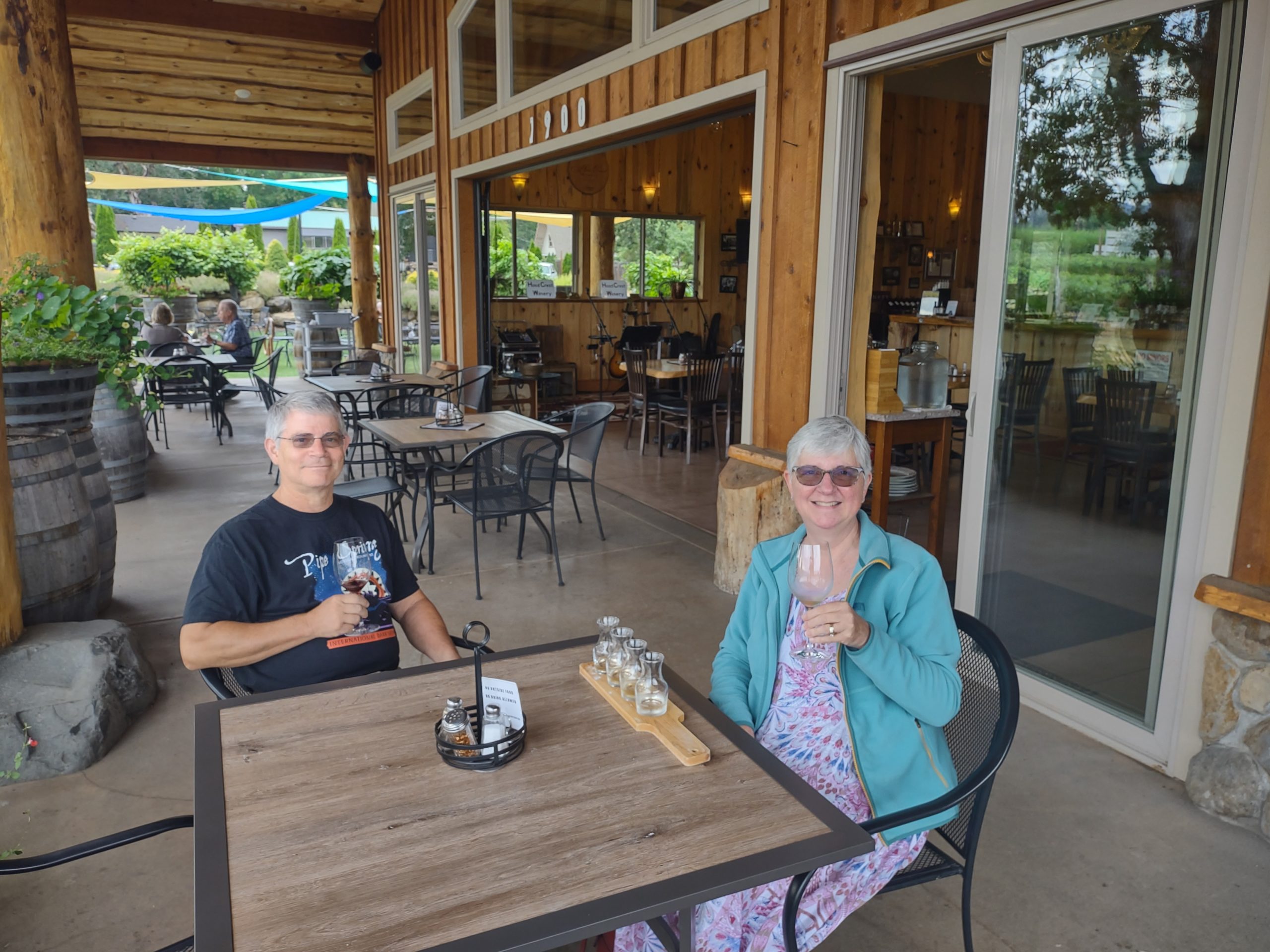
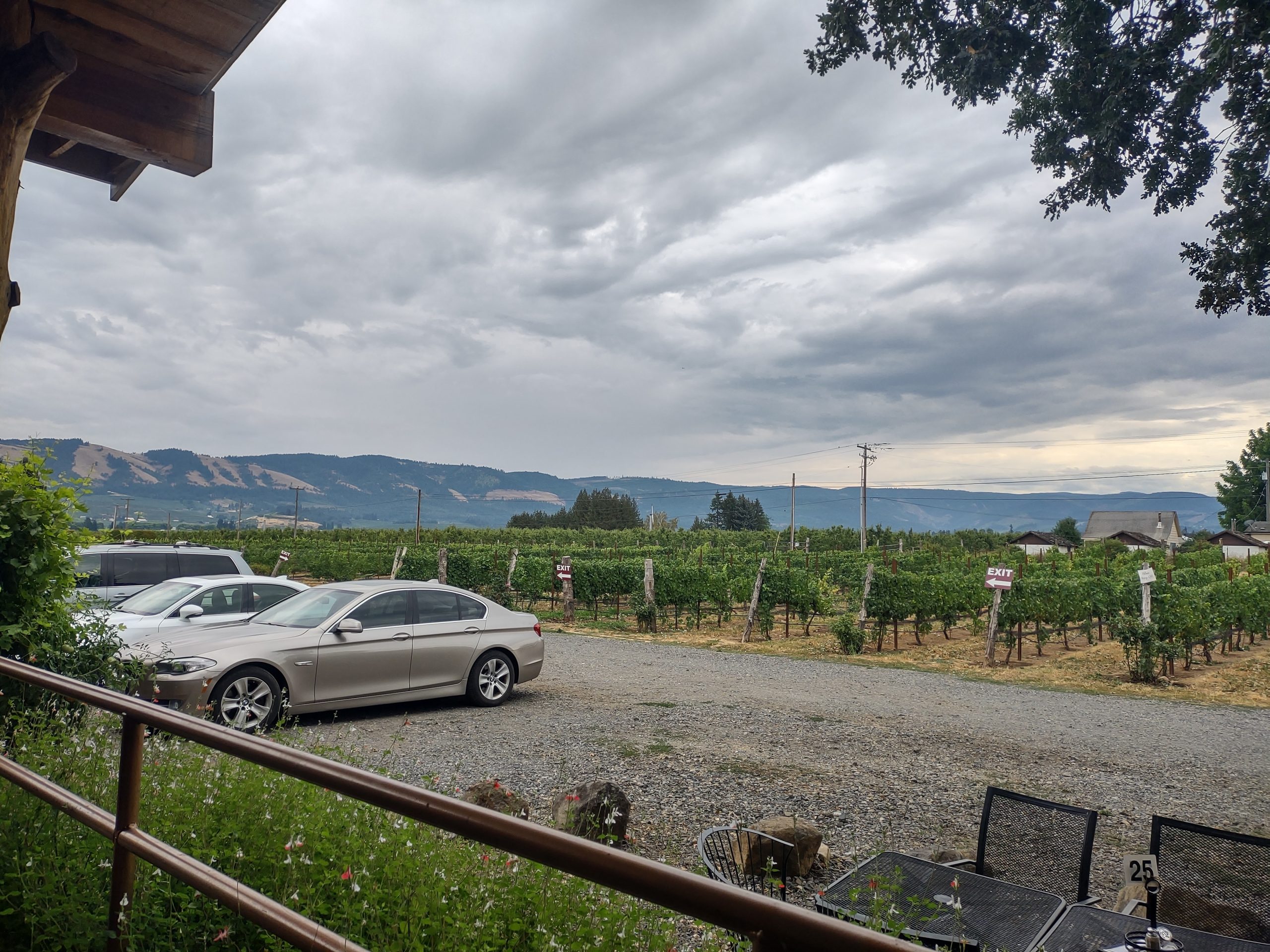
Earlier this month, we visited Hood Crest winery in the Mt Hood fruit loop. Deb tasted white and rose, with Jim again driving/ sniffing, and a little bit of sangiovese. Left with sangiovese, chardonnay and rosé, with a tummy full of pizza and a cheese plate.
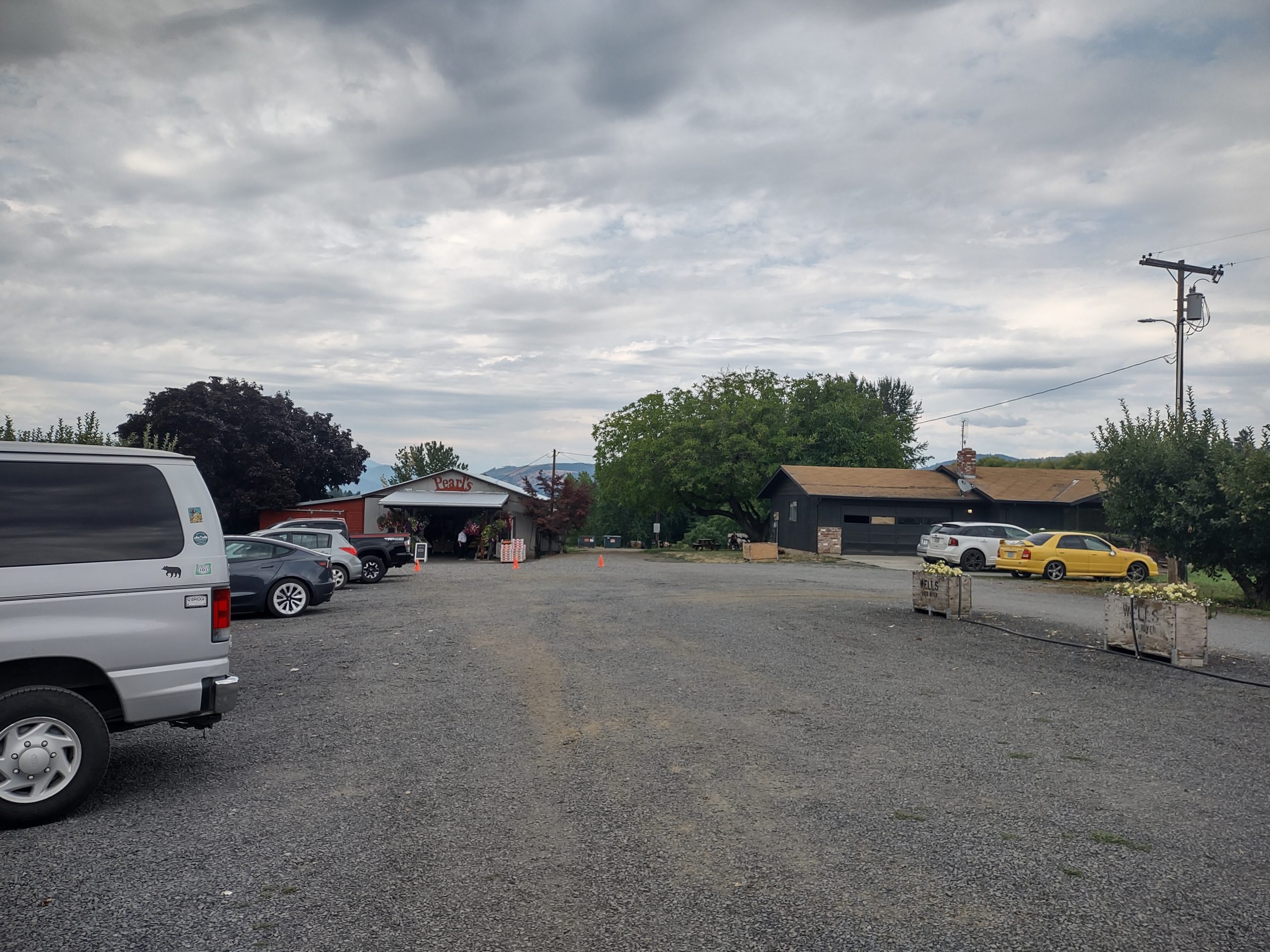
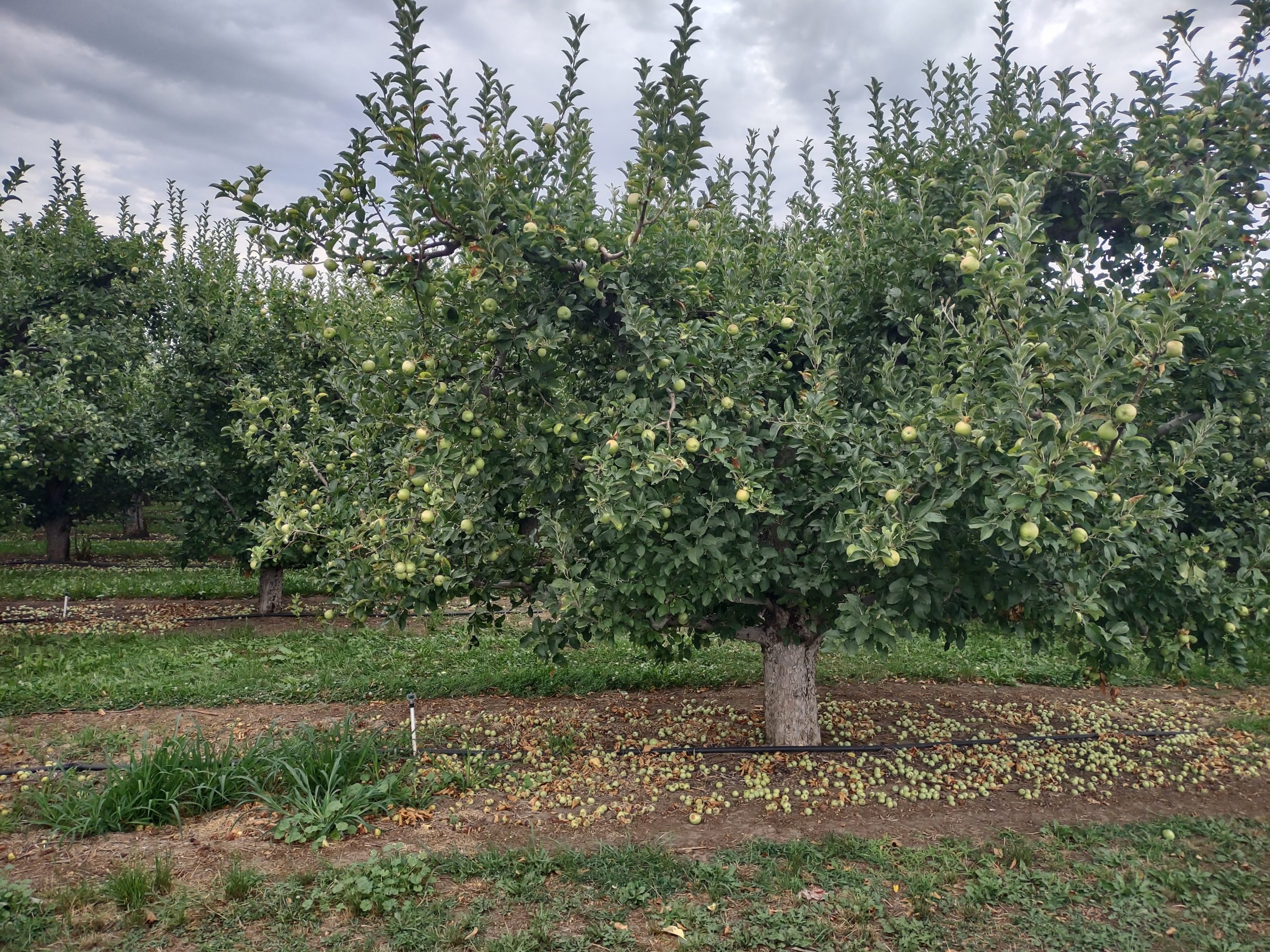
Before coming back, we had to find fruit. After all, we’re in the fruit loop, right? We went to Pearl’s market and bought cherries and peaches. Lots of fruit still on the trees.
Learn to kayak
Lots left to learn in life, and we decided to take a basic kayak course. The store Portland Kayak Company has a basic course, so we signed up and went there for a three hour group lesson. Part of the reason to do this was to learn what one needs if you have a kayak, which we might use to explore rivers and lakes back in NC.
We were each equipped with a 14 ft kayak, personal flotation device, double-ended paddle (it floats!) and traveling wheel set for the kayak. We walked our kayaks down to the Willamette River through Willamette Park. There were about a dozen of us, plus two instructors. We launched ourselves and instruction began. Learned strokes, bow and stern ruddering, how to move the kayaks sideway and that we must push against the foot peg on the side of the kayak where we’re making our stroke. Push with your left foot if you are stroking forward with the paddle in the water on the left side. Seemed strange to Jim, but it worked better that not pushing or pushing on the other side.
We crossed the Willamette River safely, despite tourist boats, a ferry and jet skis. Practiced some more and observed how to remount the kayak if you fall out (one of our party did so). After three hours on the water, we were glad to have brought water bottles, sun screen, long sleeves and a hat. Back to the Company to turn in the kayak.
Surprisingly, we didn’t learn any safety or rescue skills, like how to get back into the kayak by yourself. That was one of the first things Jim learned when sailing small boats like Finns and Lasers. Besides those skills, we’d also like to learn how to traverse rivers like the Haw and Deep, which have many rocks and mini rapids. We’re negotiating with the Company for a more advanced class. We’ve been looking at all the kayaks on all the vehicle roofs around here to get a feel for what’s available. If we do buy a kayak, we’ll probably do that here where many are available used on Craig’s List.
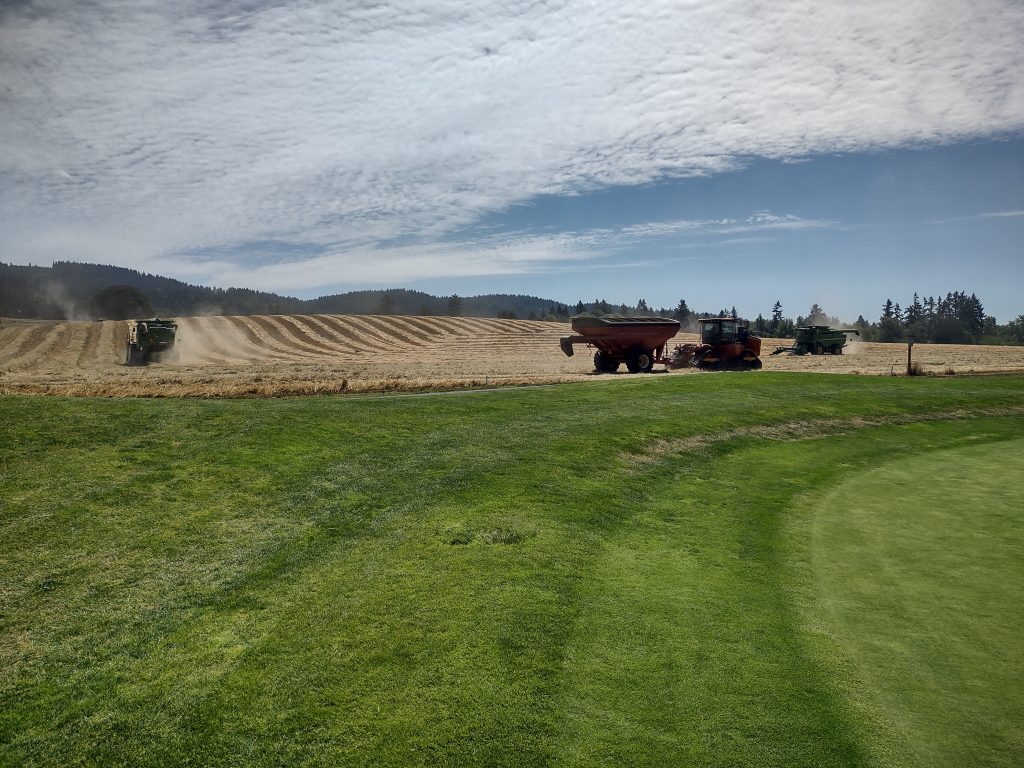
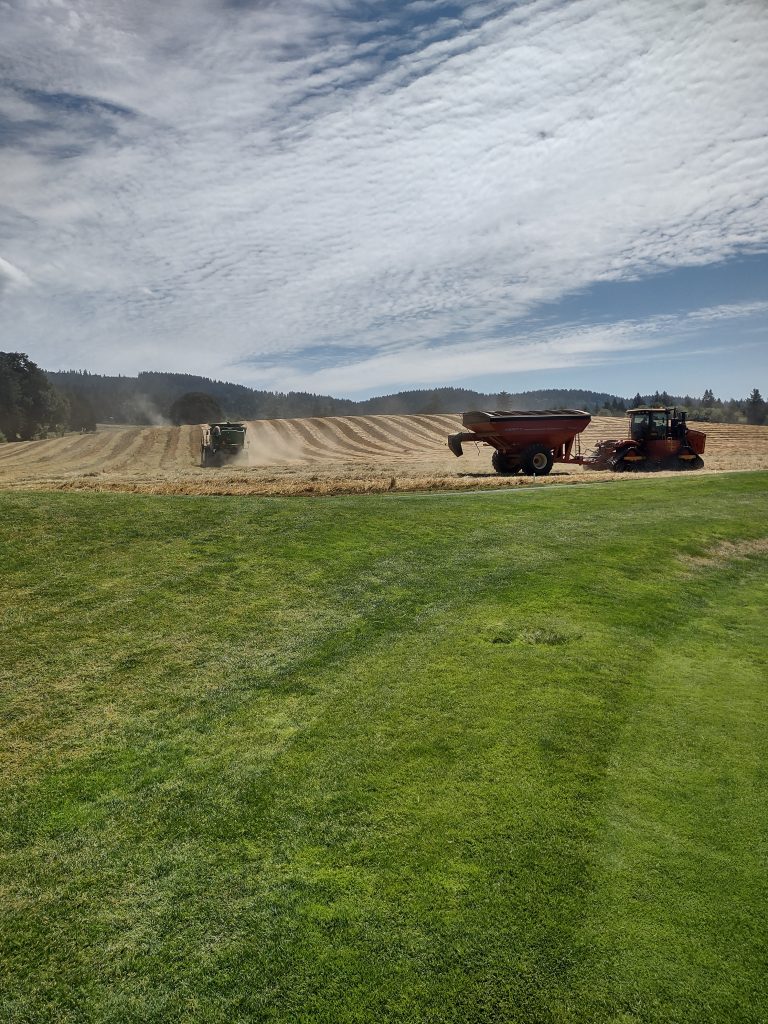
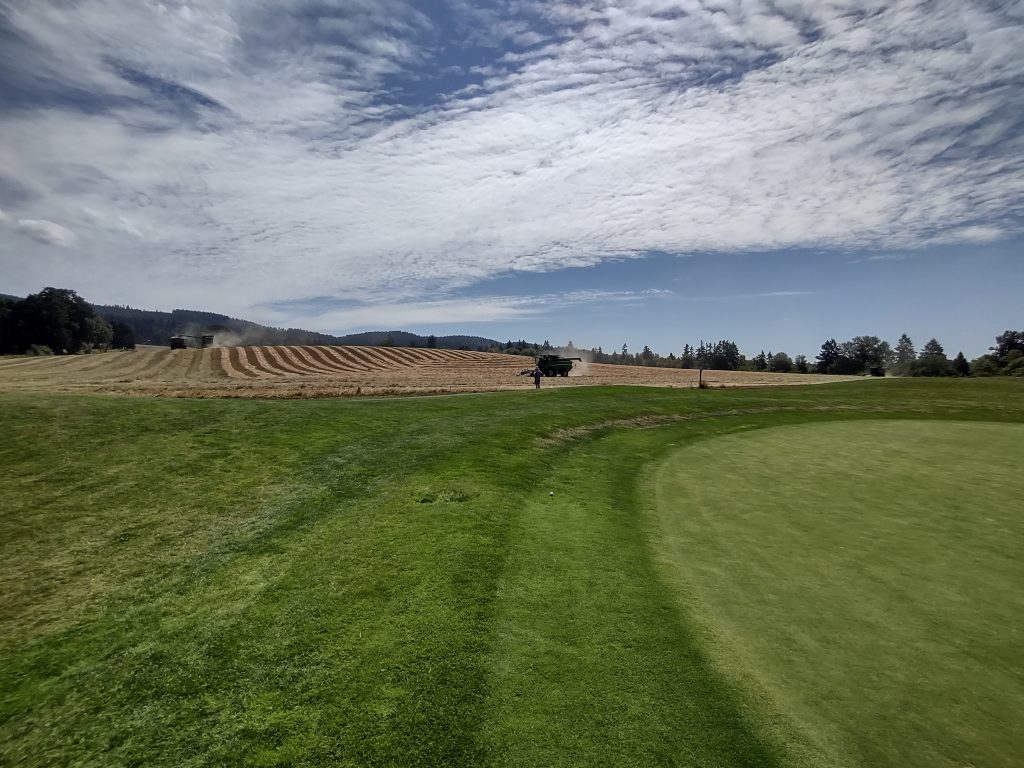
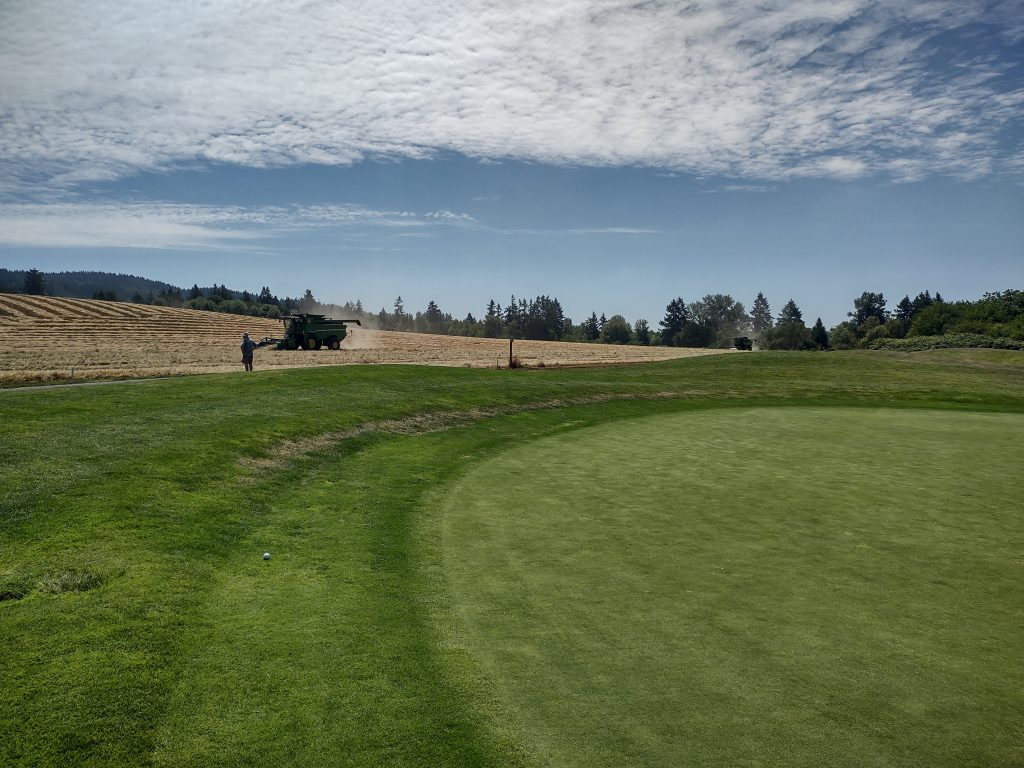
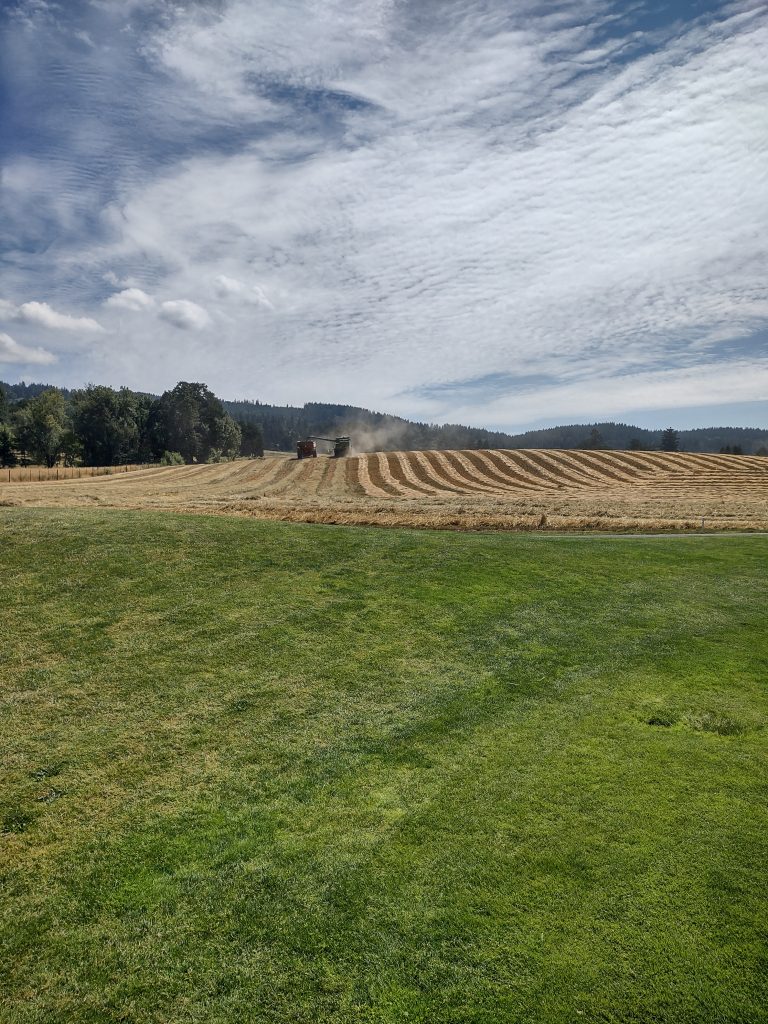
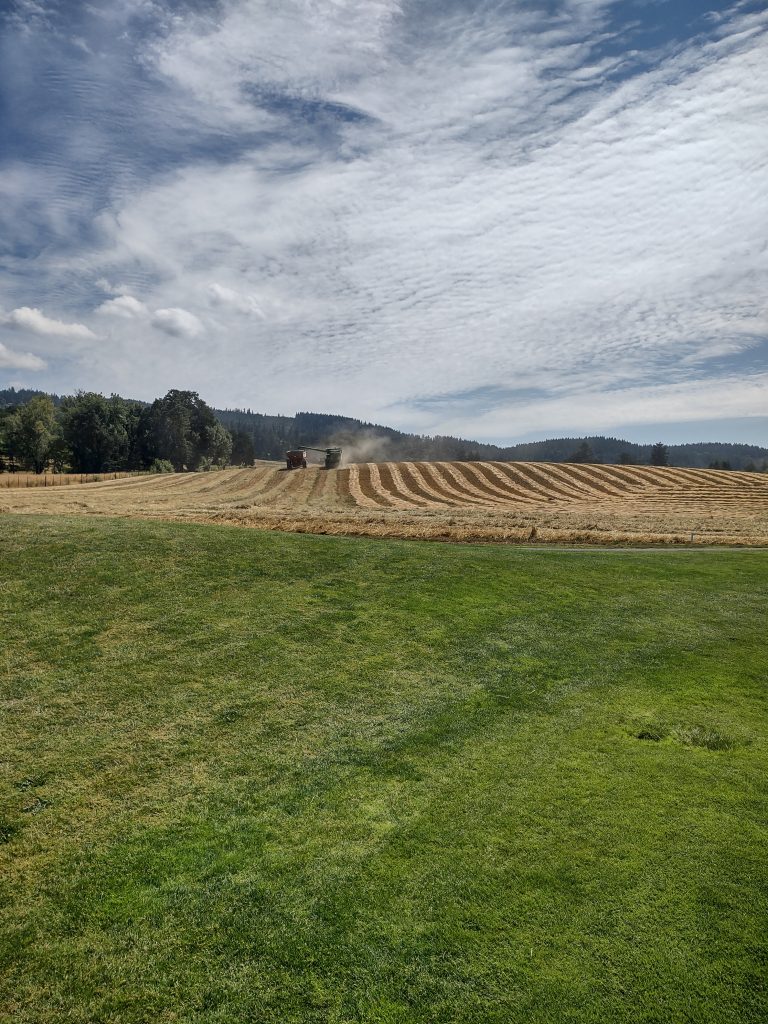
The Oregon wheat harvest has begun!
These photos are a bit west of Wilsonville, where we’re staying. The field is flat, and there were three combines working it. In The Dalles, where we were last year, the fields slanted as much as 30 degrees. The combines in The Dalles had tilting platforms, so the wheels followed the contours of the fields while the operator’s station remained relatively upright.
Some farmers in Oregon harvest as much as 18,000 acres.
Bangor to Bar Harbor and Back
The gas furnace heating the apartment failed on Friday. We spent Friday night in another unit, amid a couple of attempts to repair the furnace. Parts were on order, but the other unit was not as comfortable as the one we’ve been inhabiting. So, we decided to drive to Bangor for brunch.
We arrive about 10am at the Nest Café. We enjoyed avocado toast with local college students. Clearly, we were the oldest in the room. Afterwards, knowing the furnace was still inop, Deb suggested we drive to either Calais (pronounced “callous”) or Bar Harbor. Calais involved a couple hours longer driving, so we went to Bar Harbor for the first time since the mid 1980s when we camped our way around Maine, New Brunswick and Nova Scotia.
Entering Bar Harbor, the car made an unexpected stop at Fab-ri-Cate, a quilting shop. Deb found some Maine-themed fabric and a pattern or two. We enjoyed chatting with the staff about how central Maine has changed for the worse with the loss of paper mills. Lower employment and prosperity, but lower stink, too!
We moved the car over to the village green and walked around town for a while. Bar Harbor is clearly a tourist town, and hordes of folks from “away” descend on it during th summer. The wind off Frenchman Bay was quite chilly. After a while, we drove the car to a recommended lunch spot.
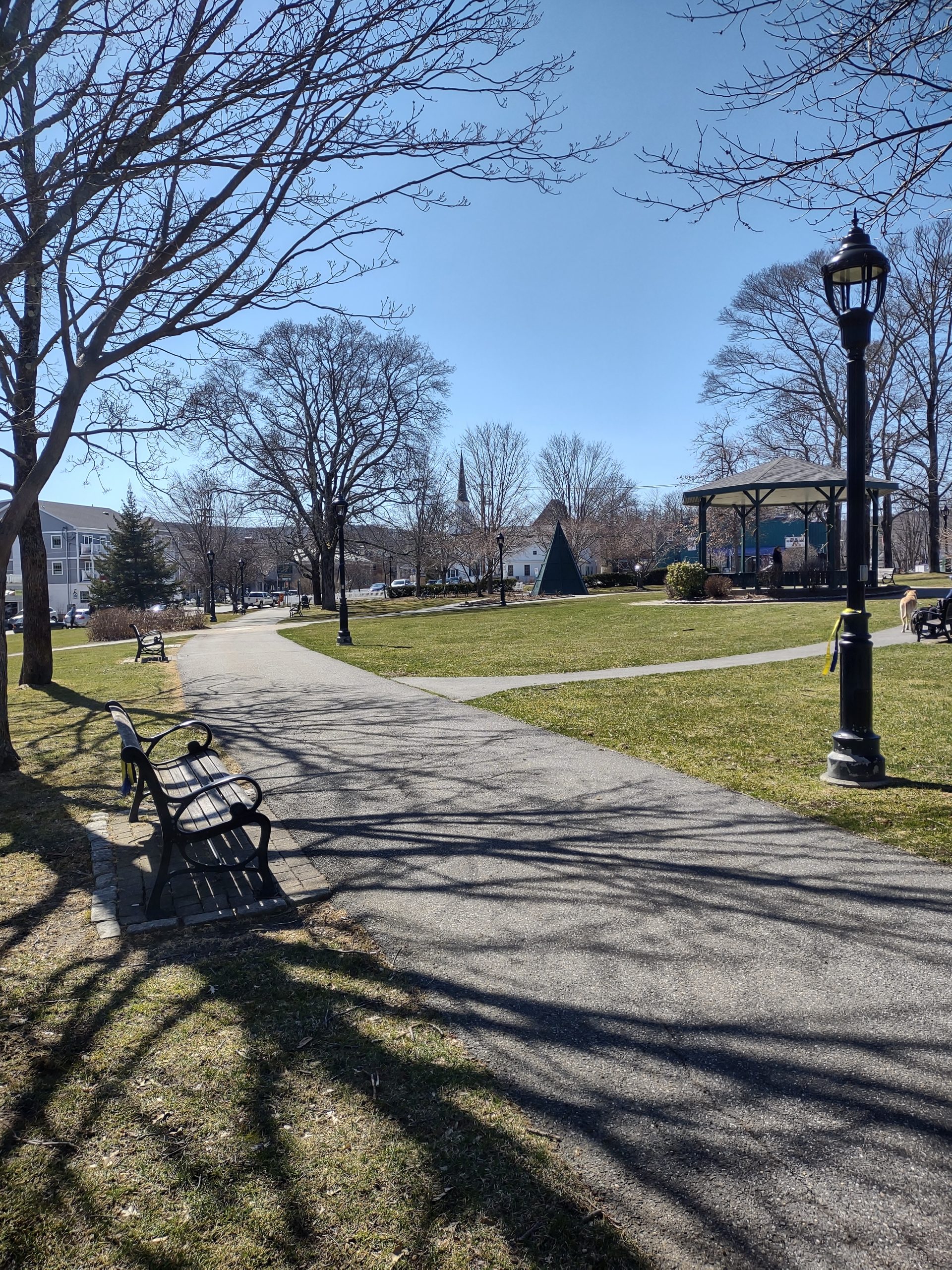
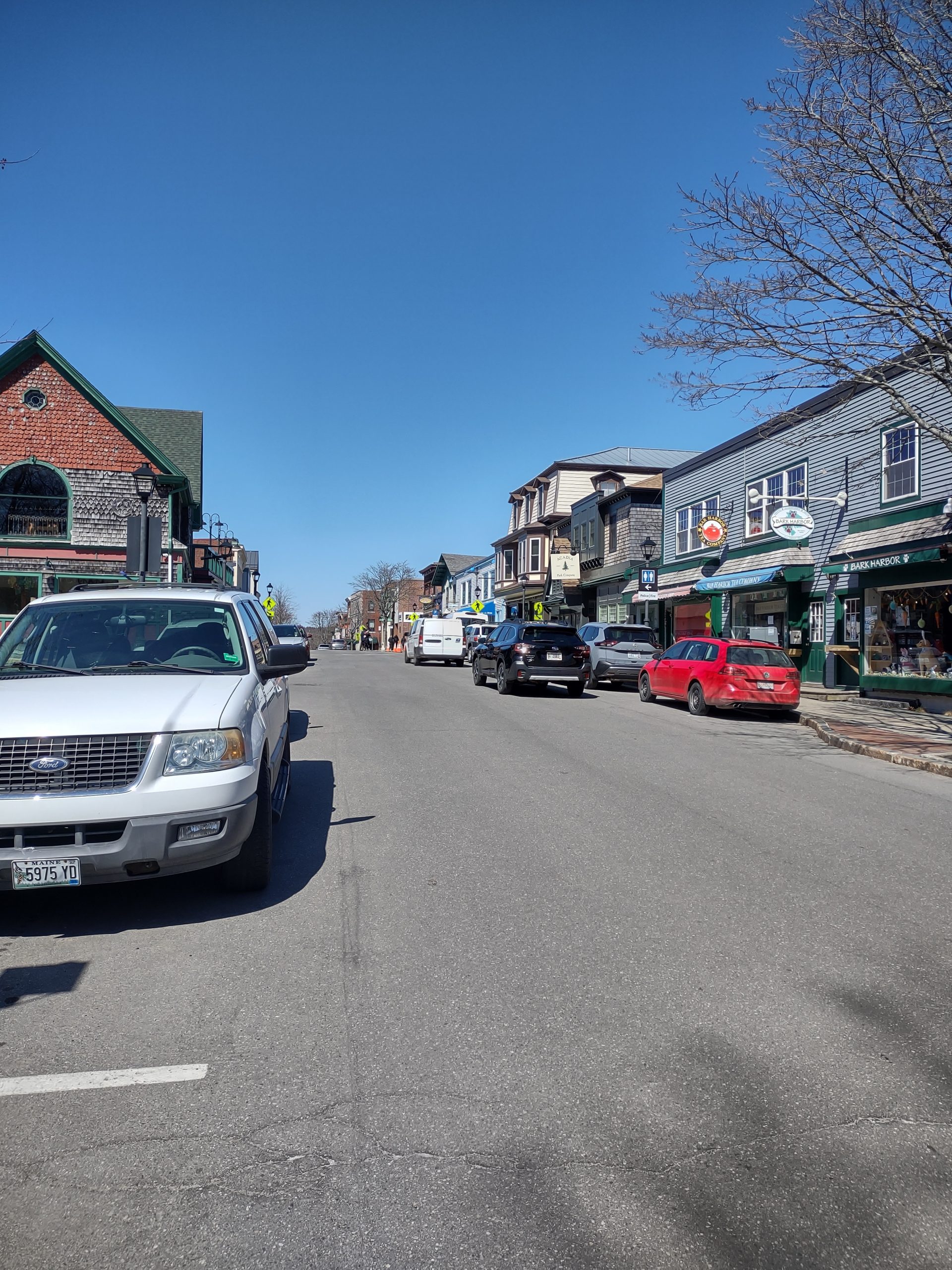
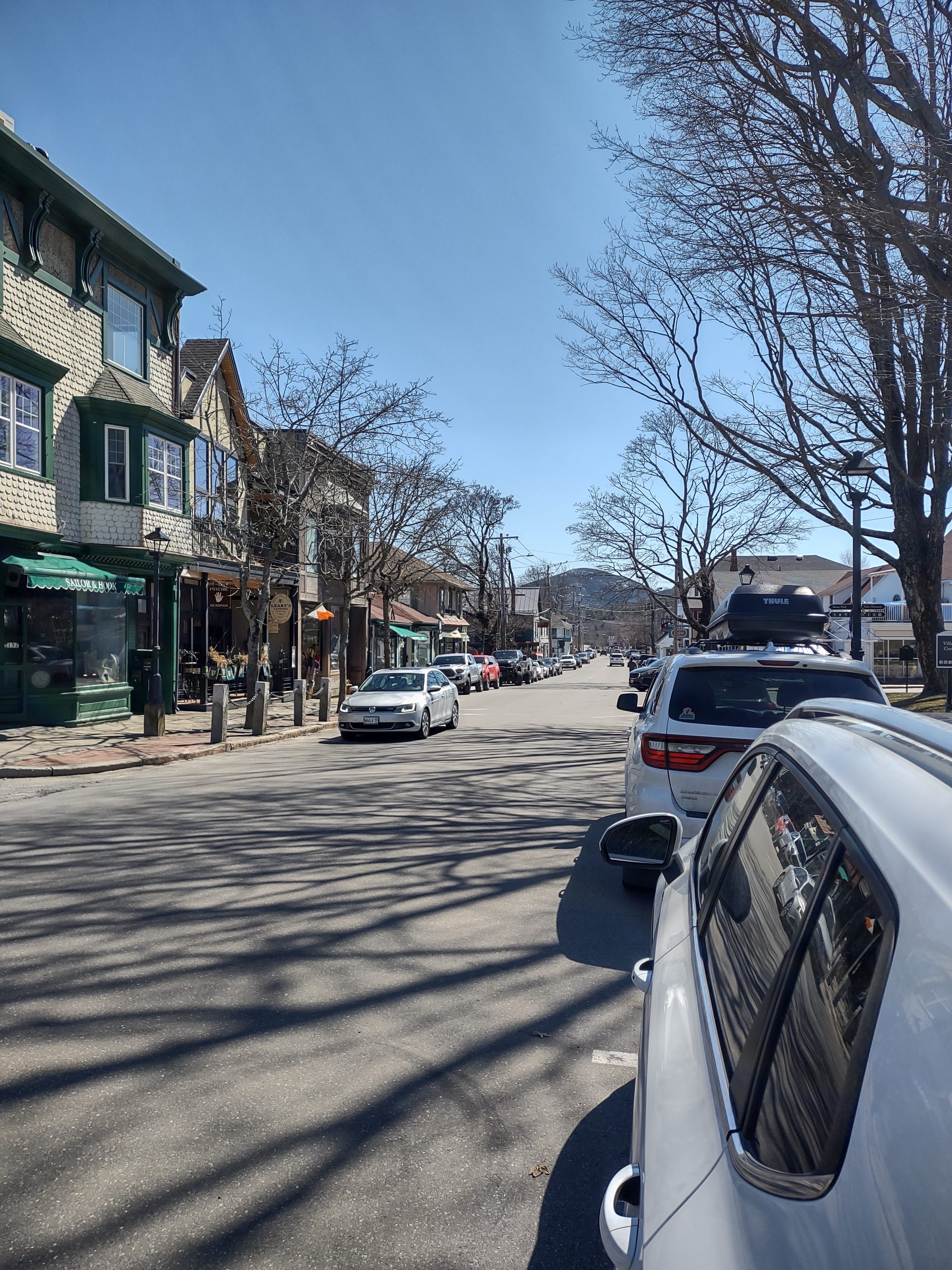
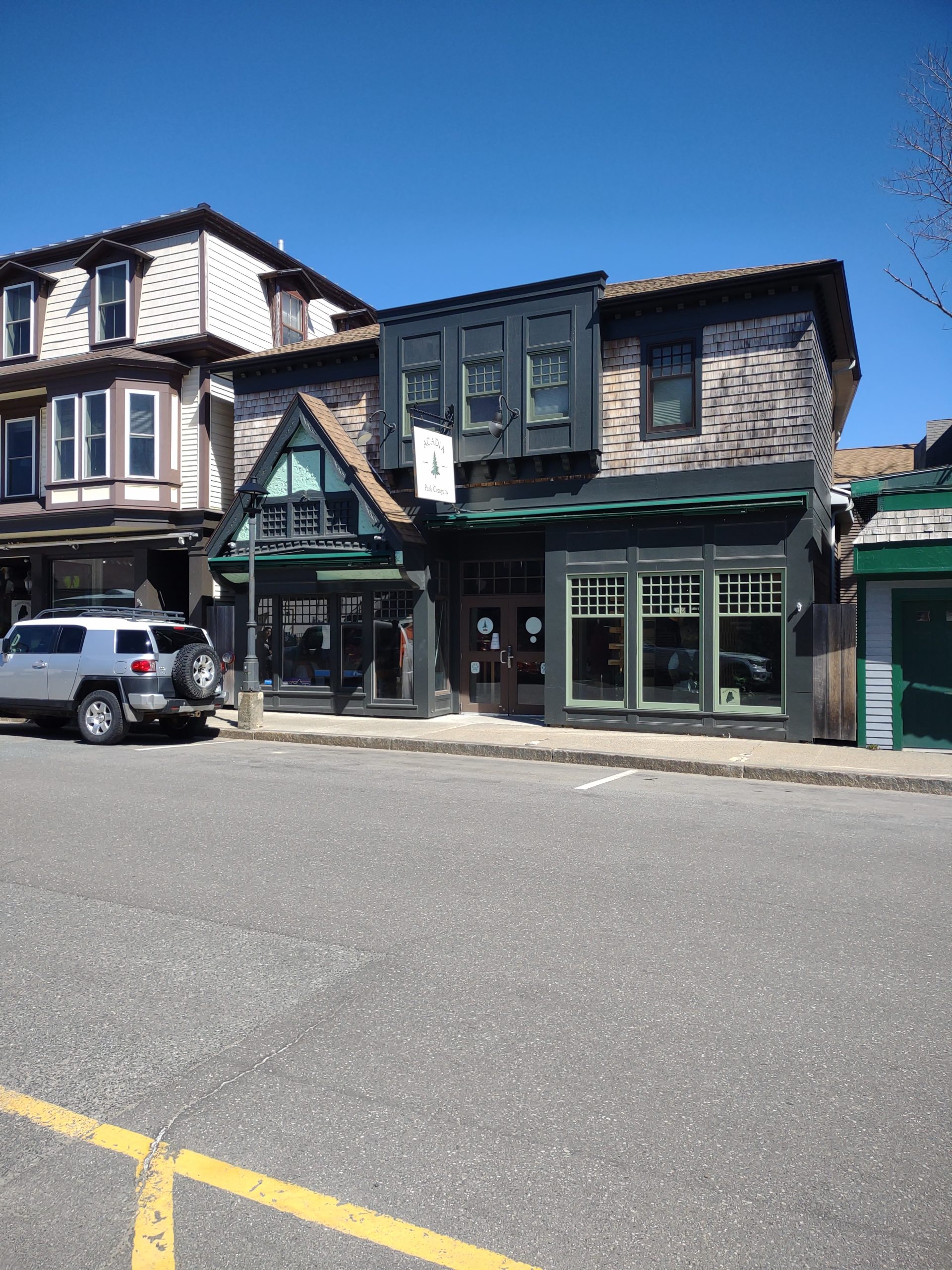
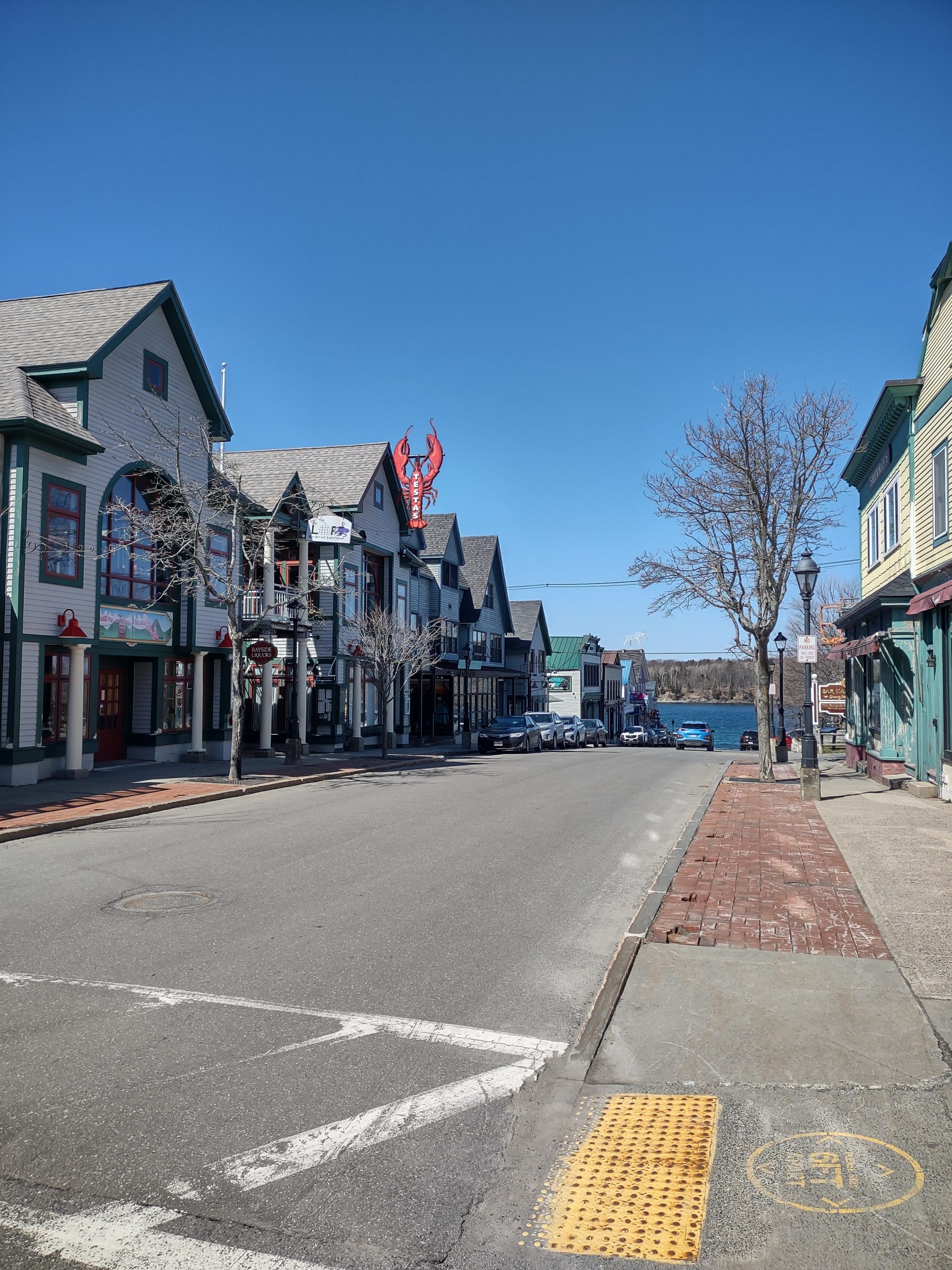
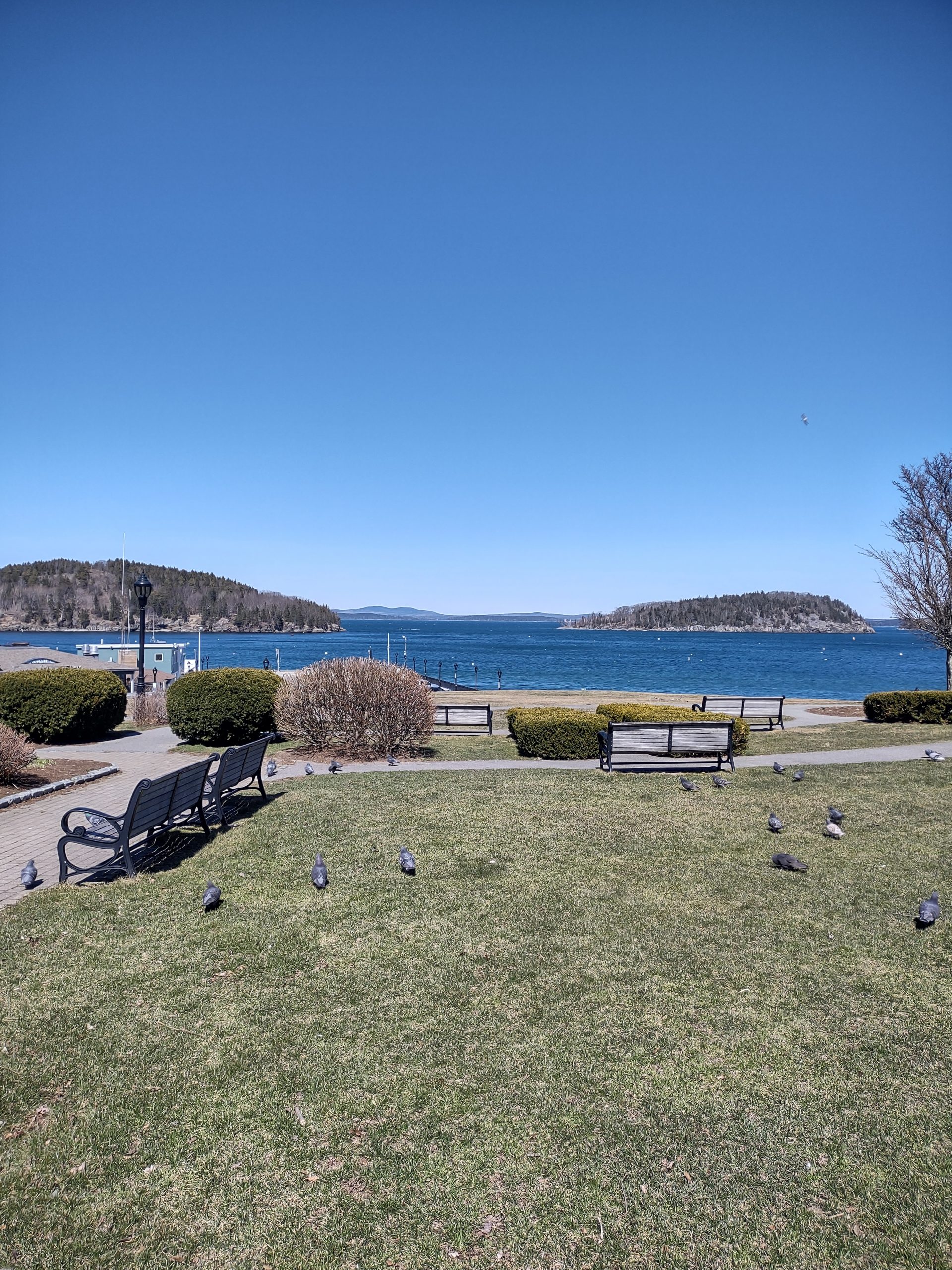
The green pyramid on the village green seems to be a weather cover over a fountain. We saw a few of them in the two parks/ green spaces.
The Side Street Café had a distinct advantage over the Indian and Thai restaurants: it was open! The season in Bar Harbor starts in mid-April, so we were a couple of weeks early. Deb had the beet salad and a brown ale (American Brewing Company). I had the chicken caprese salad and a Coastal Haze IPS from Baxter Brewery.
Back to Lincoln after lunch. The Master’s golf tourney is on, so it’s on the telly. Furnace is fixed and we’re warm again.
First World cooking
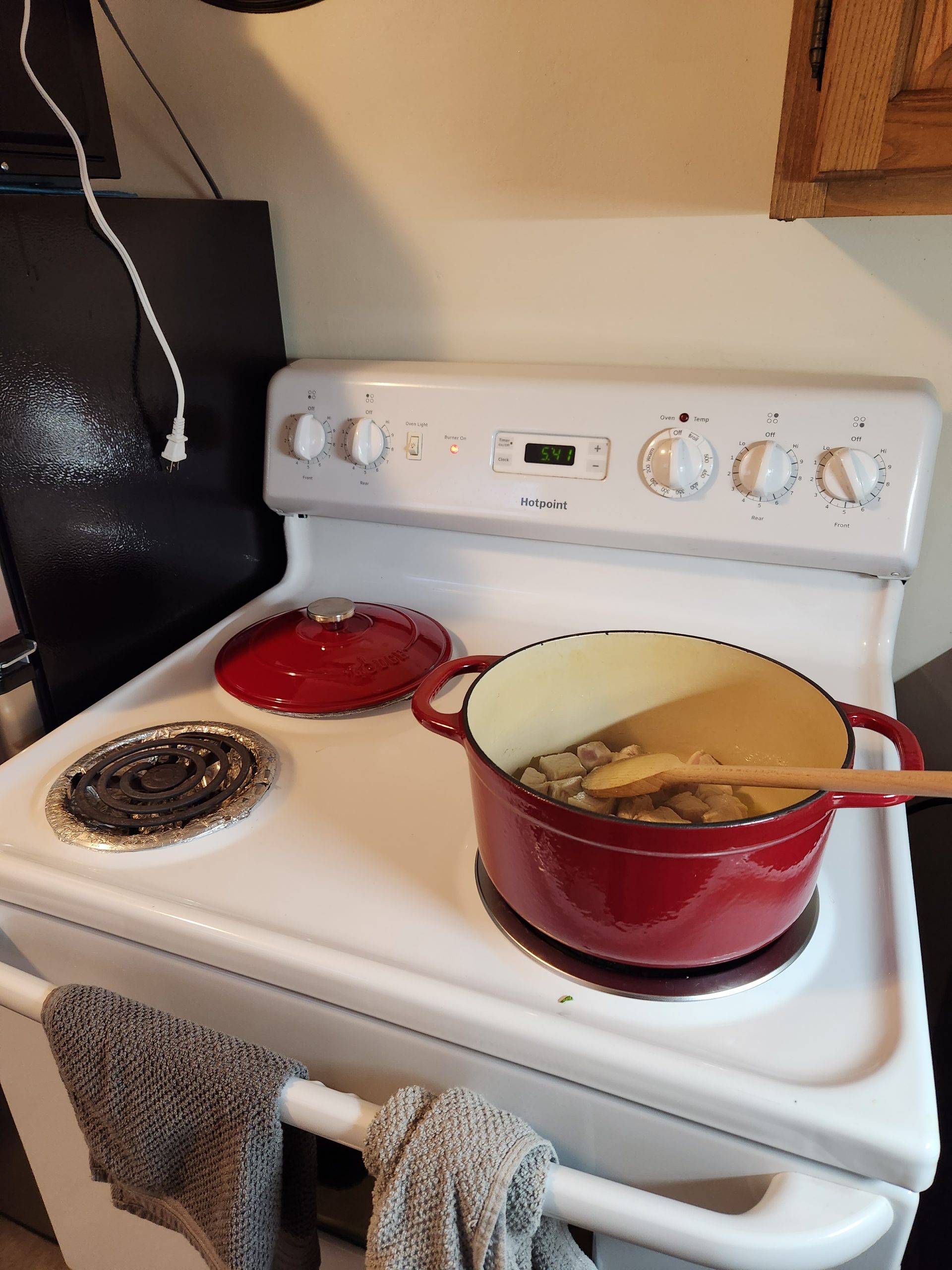
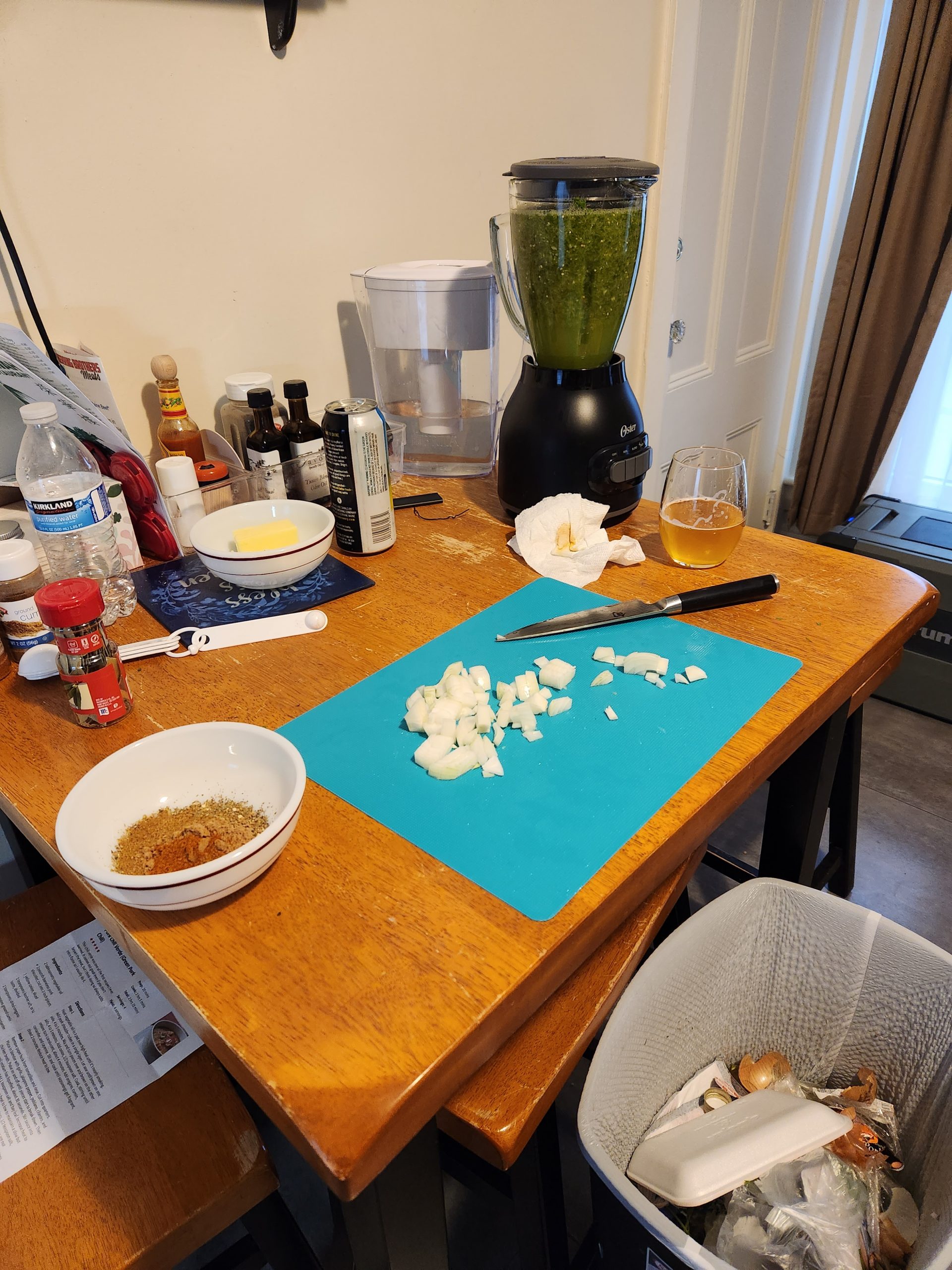
It’s a sleety day in Maine, unlike the 85 degrees at Raleigh today. Temp got all the way to 30 today! You’ll have seen our previous re-visit to the Katahdin view. We got home and are making chili verde. What you see in these pix is why we travel in a motorhome when the clime is friendly. We’ve had to buy a blender, another chef knife, cutting mats, a dutch oven and numerous spices to kinda sorta not replicate our gourmand arrangements at home. We have a better arrangement in the Goose! Note the electric stove … poor pitiful us with our Third First World problems!
Re-visit Knife Edge Brewery
We came back to the Knife Edge Brewery on a much less cloudy day. Had the same fantastic Greek pizza with the perfect thin crust and some local brews. We could actually see Mount Katahdin out the windows and along the way today. Pictures when we get them off the camera.

Belfast
Our friends Dave and Barb have bought a cabin somewhere near Belfast, Maine, so we decided to explore there. You’ll have read our post on Bucksport, which was the first exploration near the cabin. We have no idea of the exact location of the cabin, so we are unrestrained in our exploration.
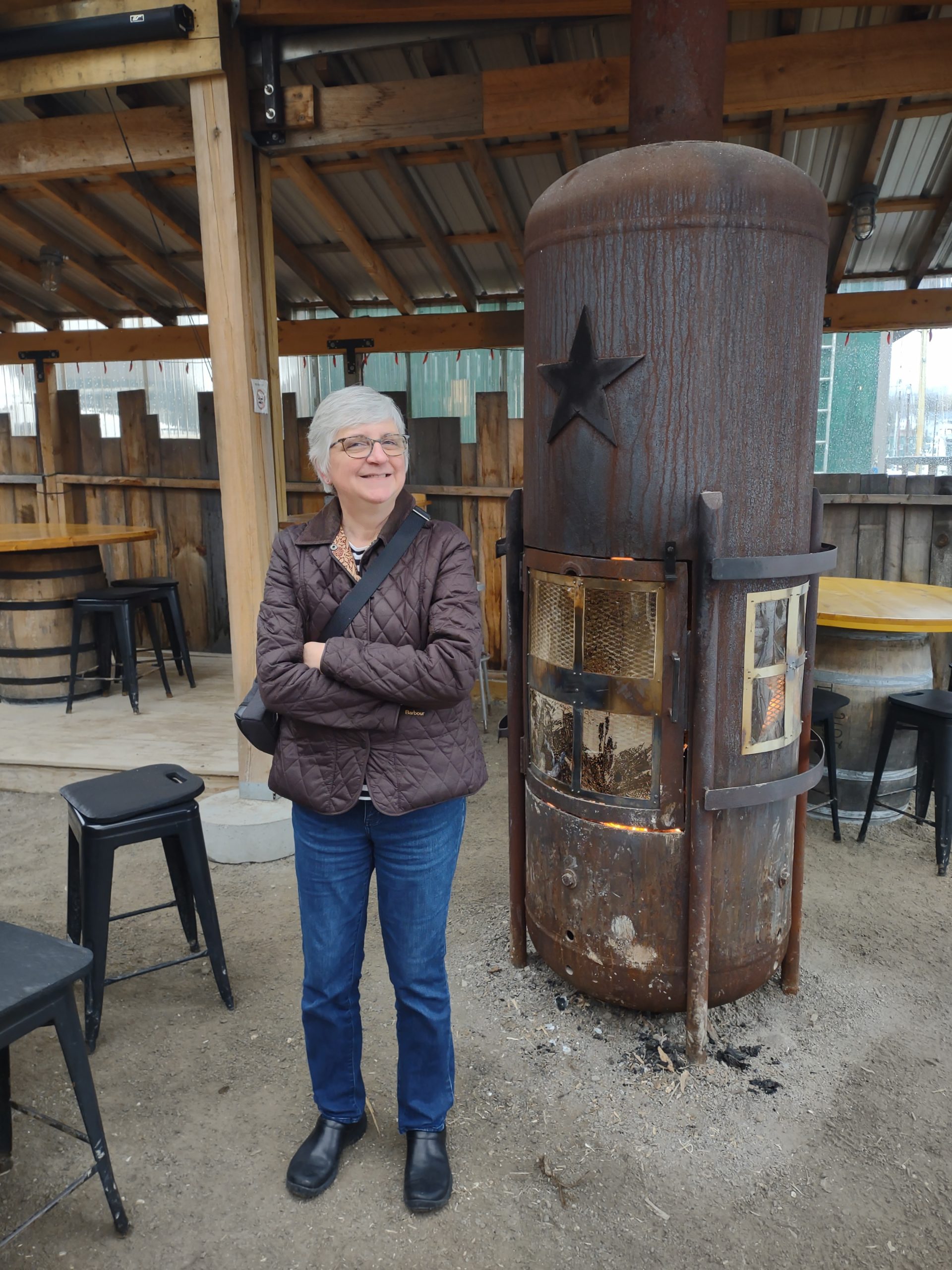
Belfast is a little over an hour from where we are. It is on the Passagassawakeag River (easy for YOU to say!). We headed first to the Marshall Wharf Brewing Company, given our arrival about 1pm. Great local brew in an outside/ covered atrium with a huge tank heater. Food was passable, but the beer was so good that Jim took away a growler of Florida Man IPA for later consumption. It’s gone now.
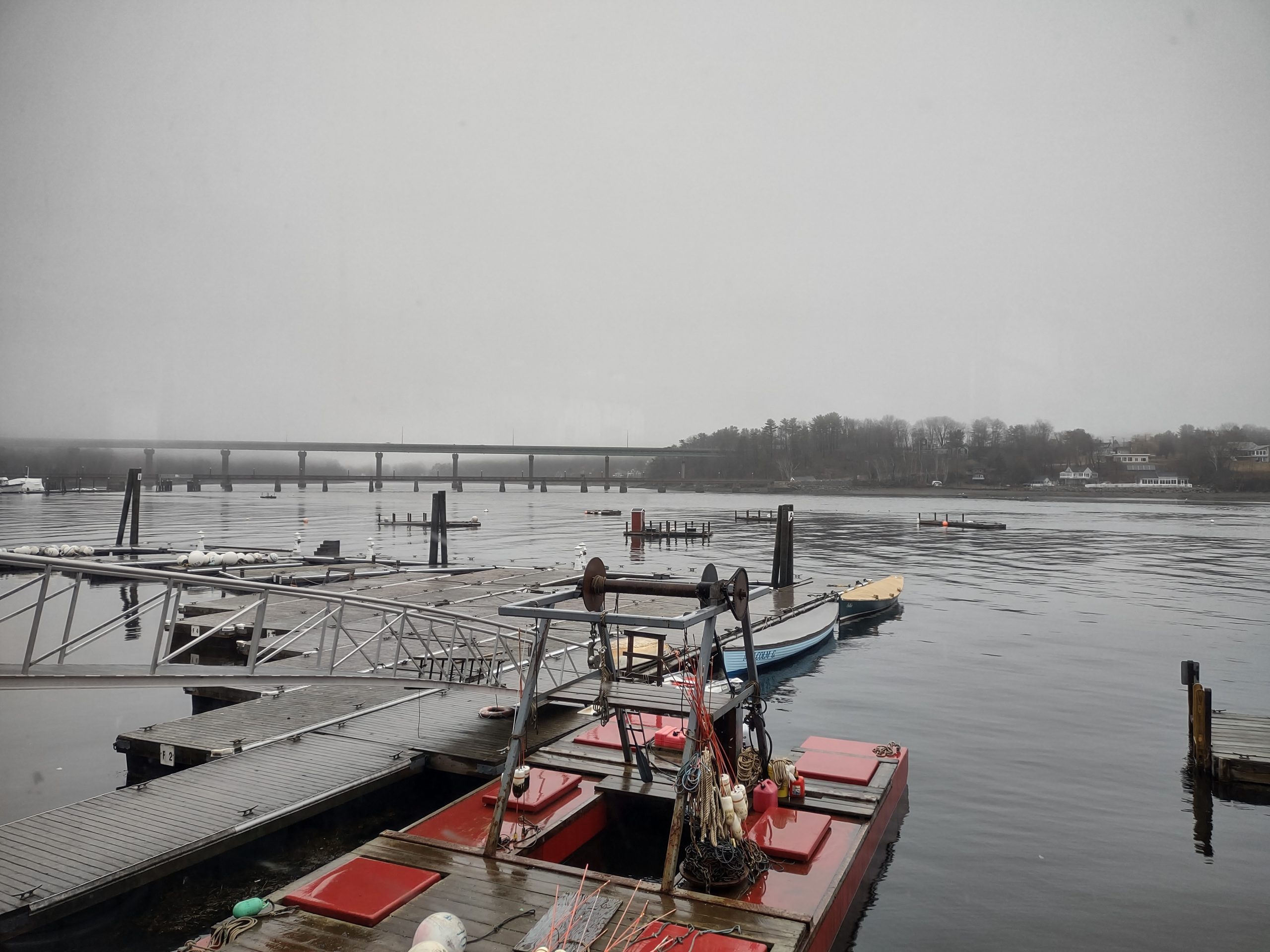
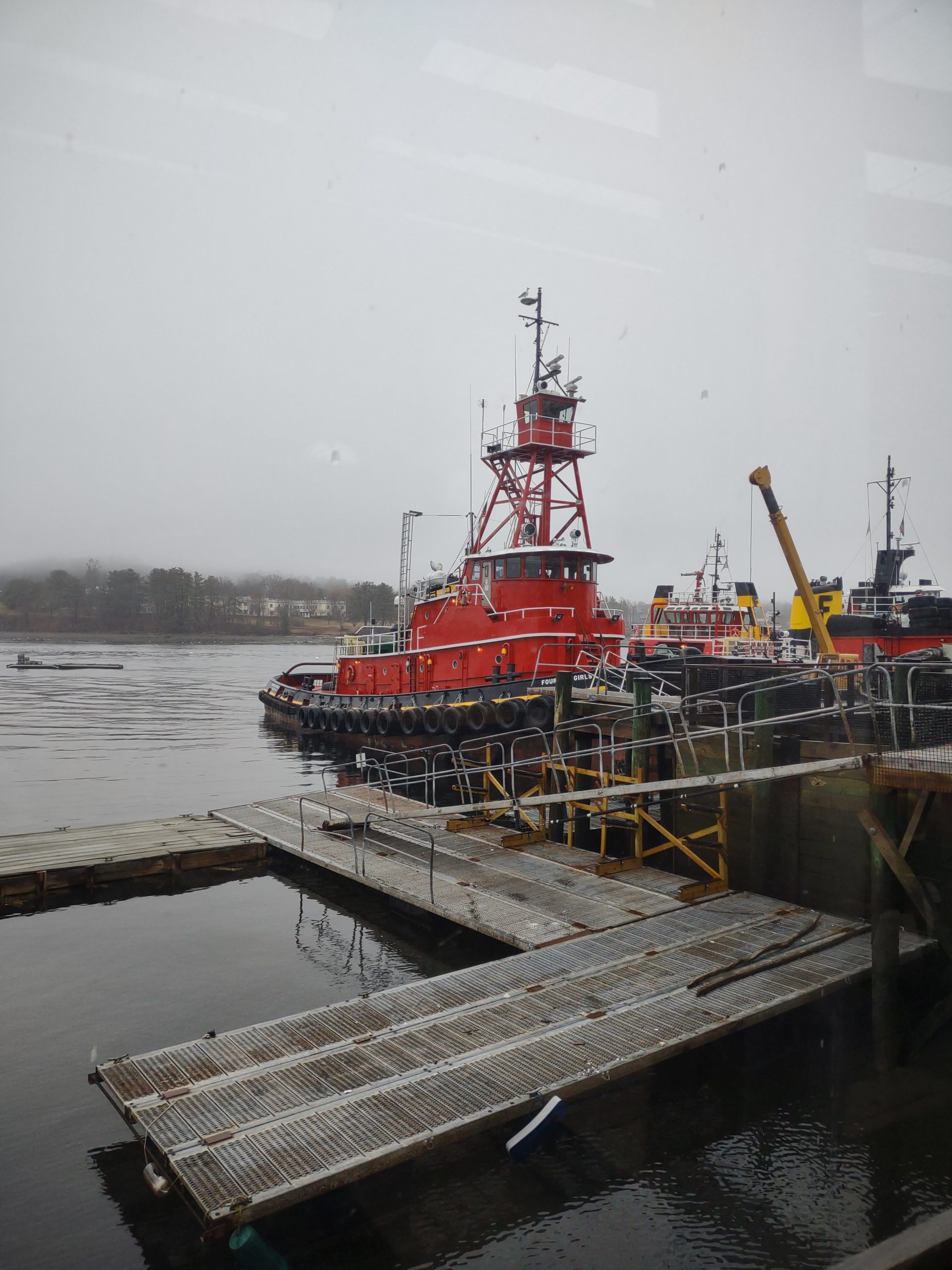

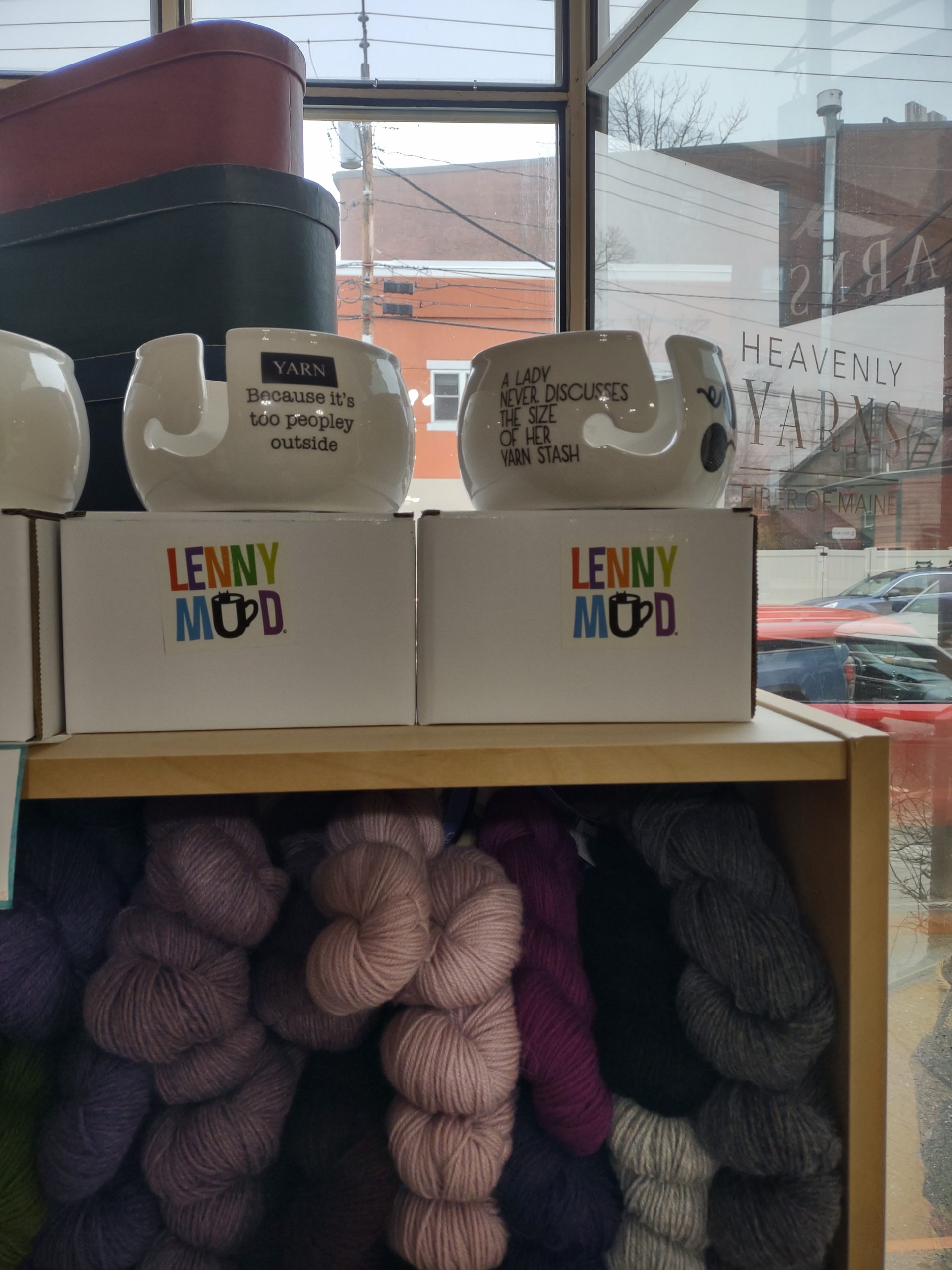
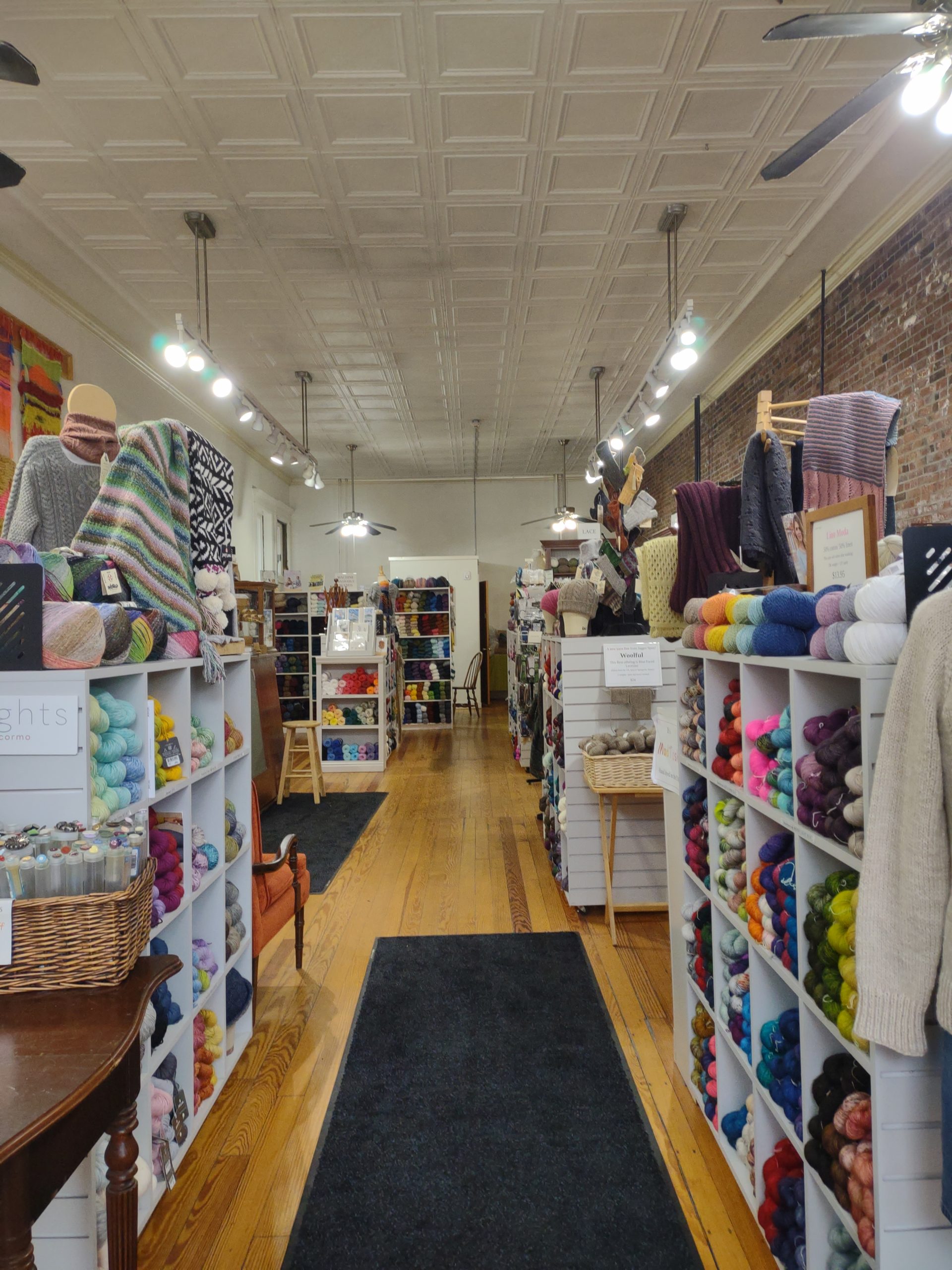
Then, of course, we walked around town. We bought cheese at the local shop; a wooden spoon at a kitchen store; a wonderful book about a helper of Rick Steves at https://www.olsonbooks.com/; and we stopped at Heavenly Yarns. Despite their best intentions, we didn’t buy any yarn. A first!

Bucksport, Maine
On the recommendation of friends, we headed to Bucksport, Maine, on Tuesday. It’s a town near the point where the Penobscot River empties into the Atlantic Ocean, down east in the general direction of Castine and Acadia National Park. We headed there for the river walk and a particular brew pub, that being one of the organizing principles of our time in Maine. A drive of a little more than an hour got us there.
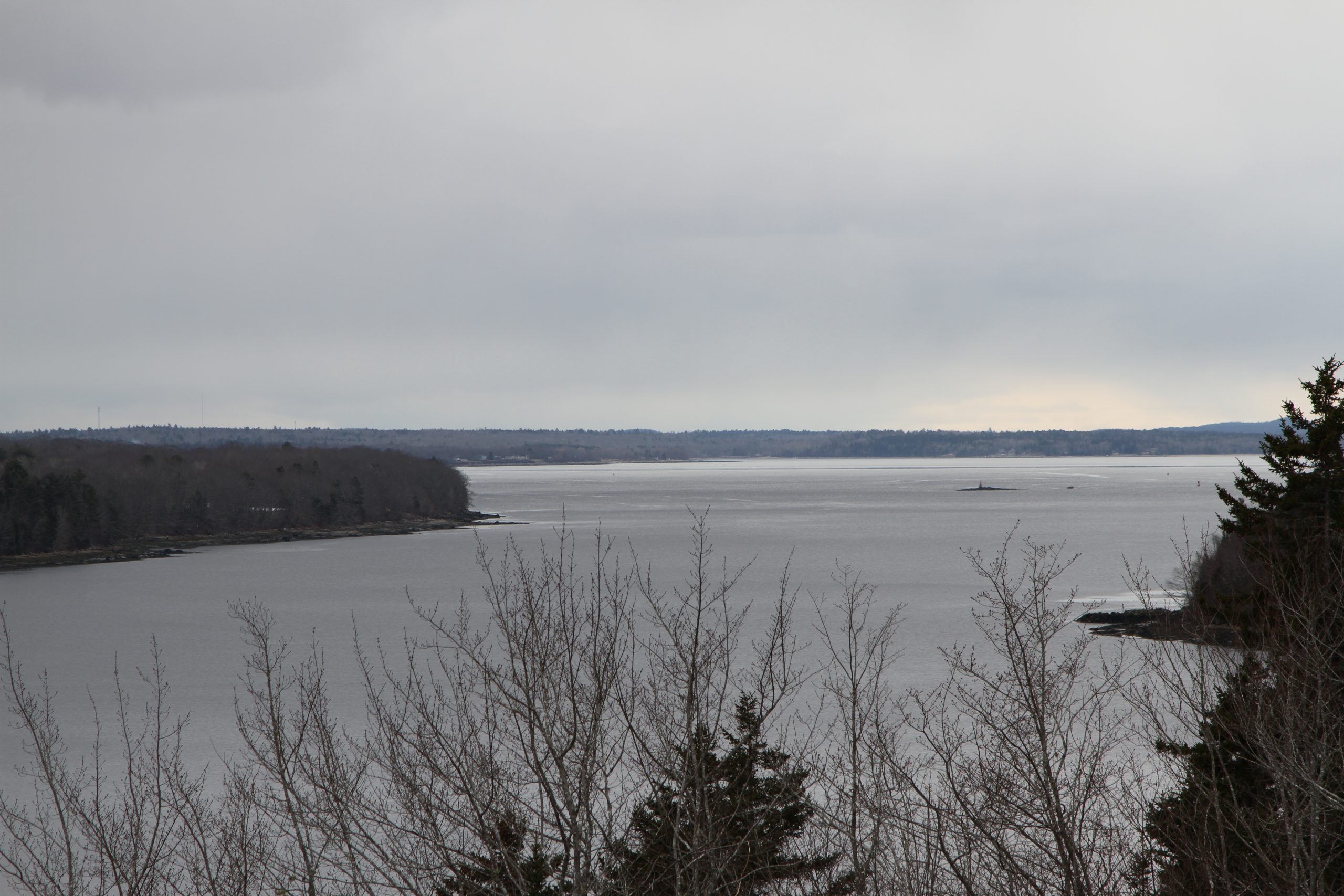
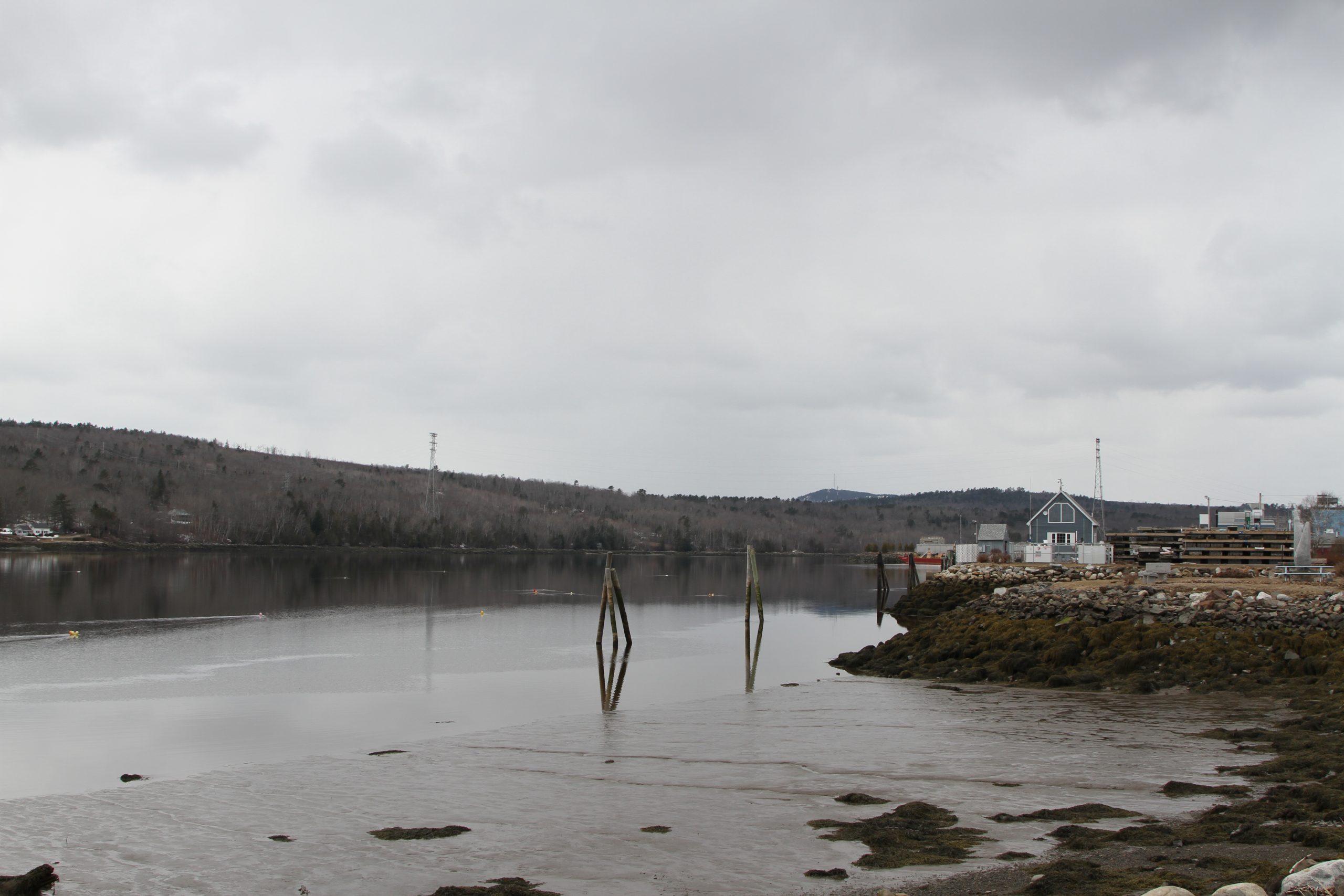
We parked and started on the river walk. Across the Penobscot River, we saw the Penobscot Narrows Bridge (an emergency replacement for the previous Waldo-Hancock bridge) and a civil war emplacement, Fort Knox. No shots were ever fired from Fort Knox.

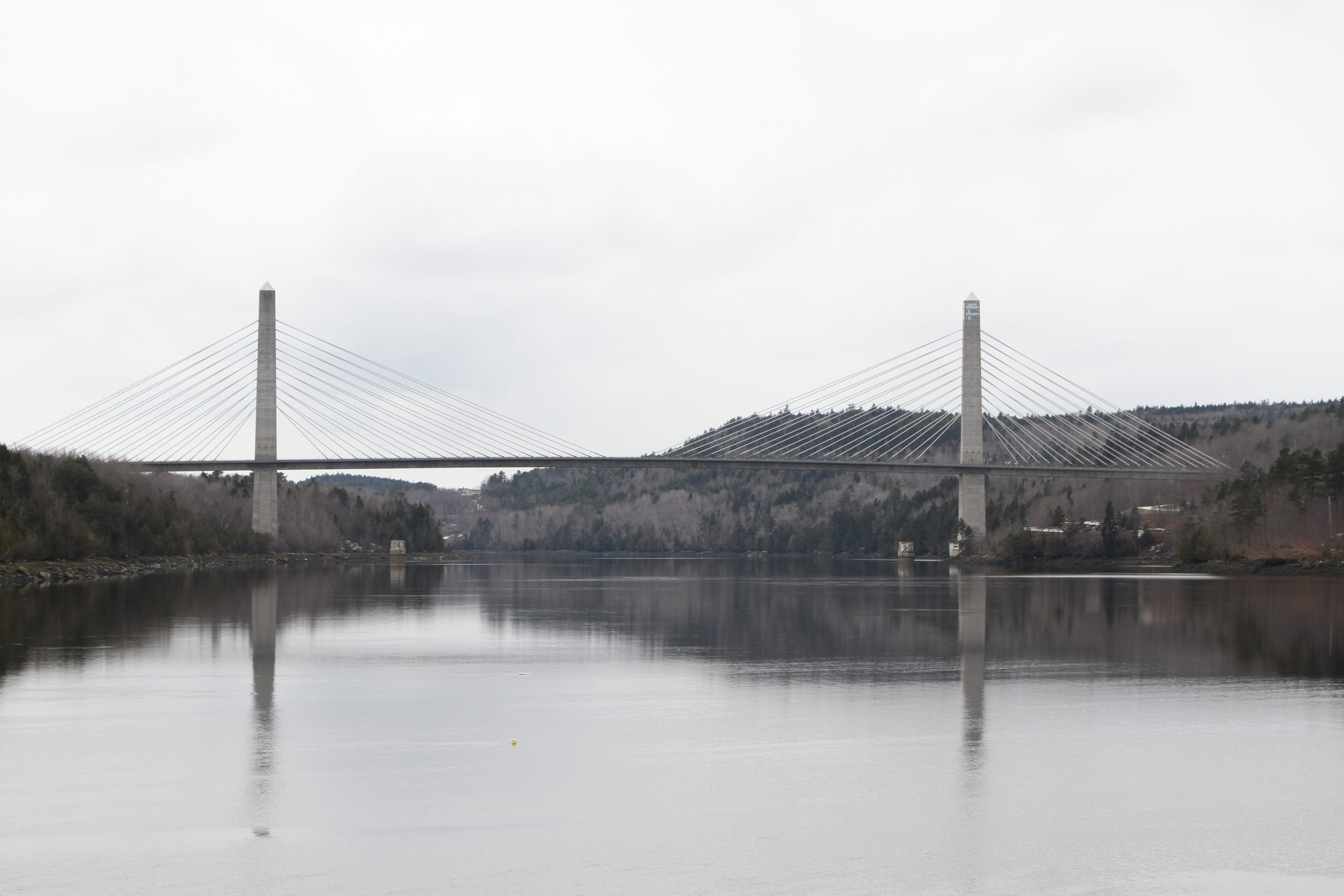
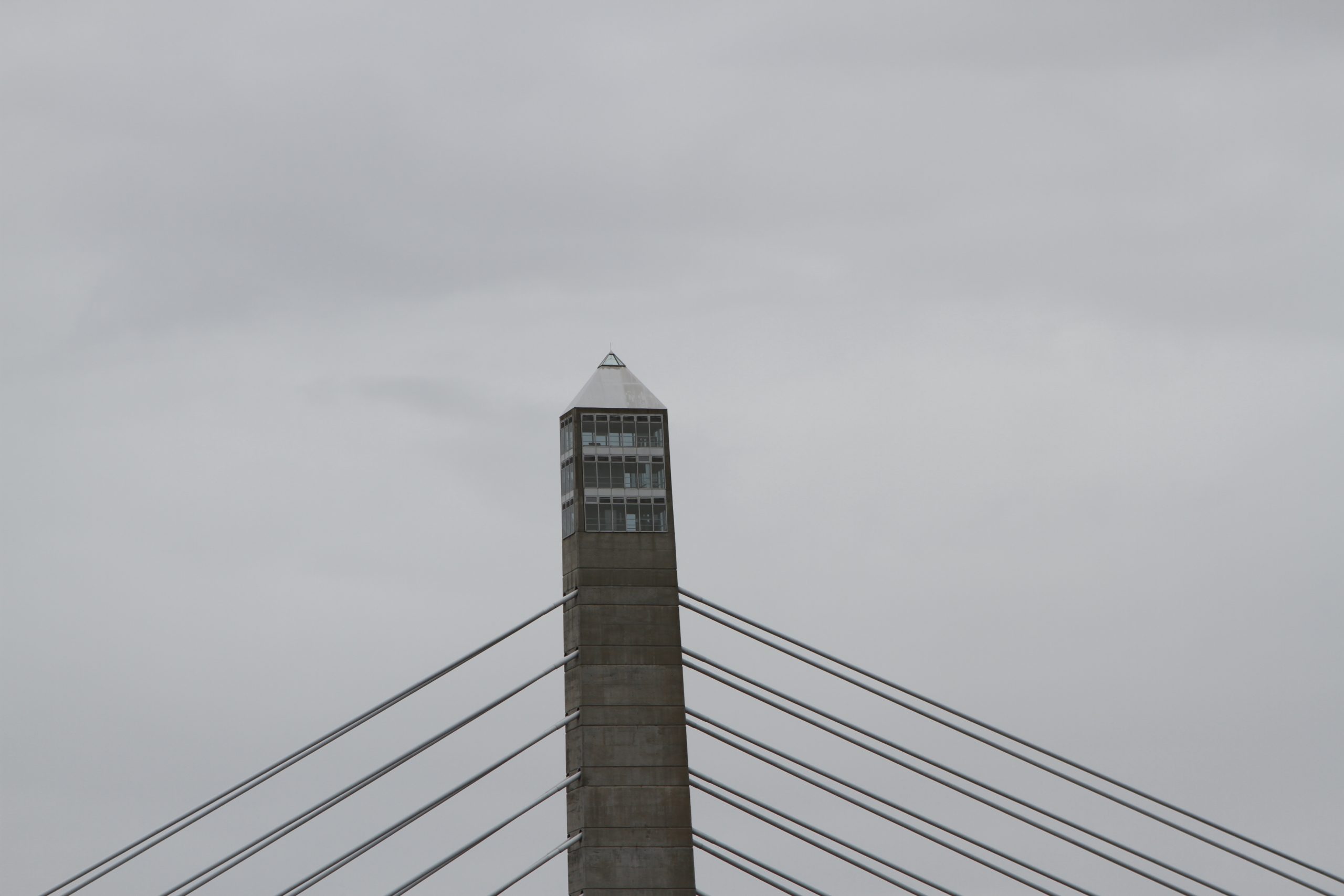

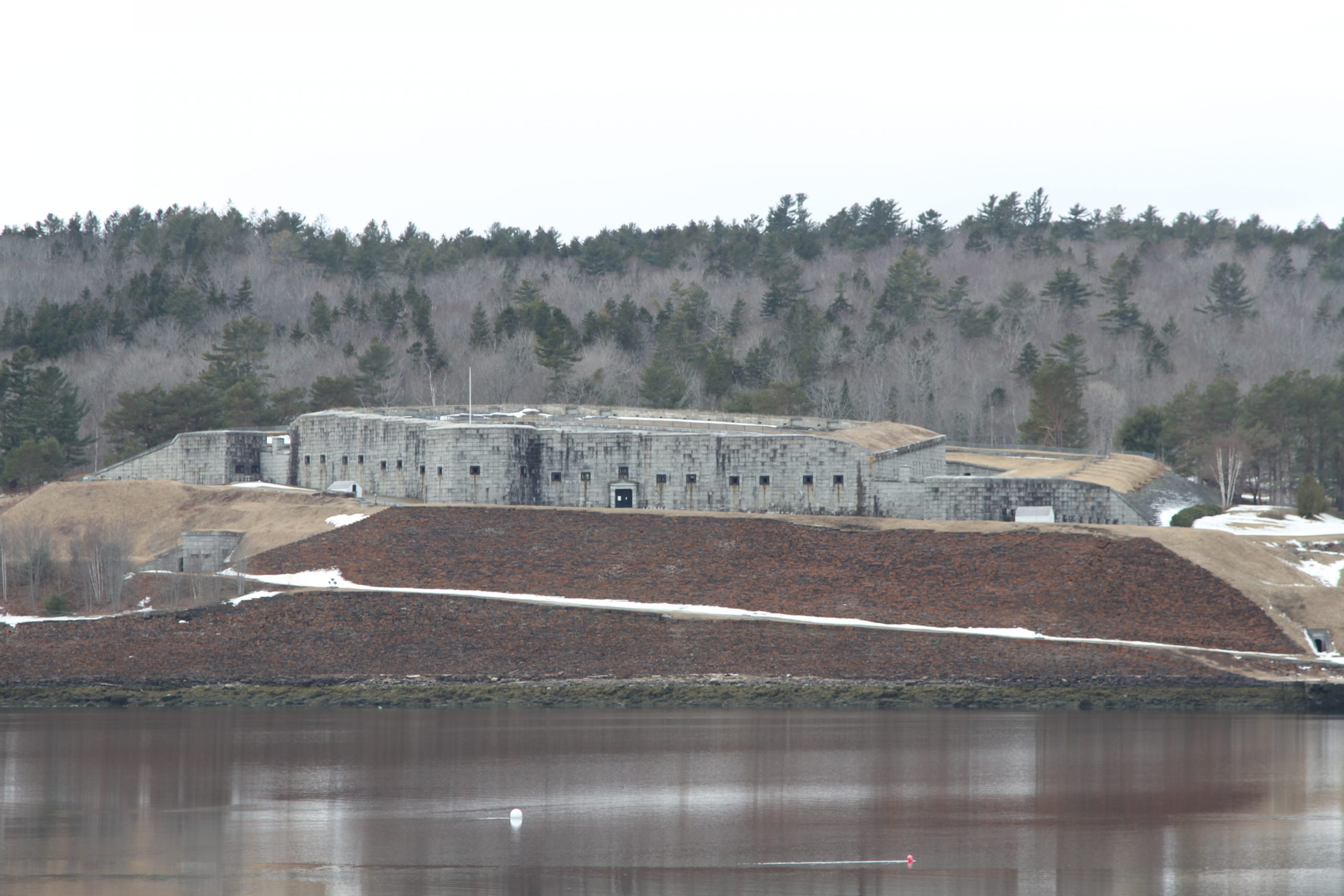
There was much evidence of the nine-foot tidal range. Pontoon platforms were stacked out of the river, waiting for the busy summer tourist time. Then it started to sprinkle, so we cut short our river walk, and headed for lunch.

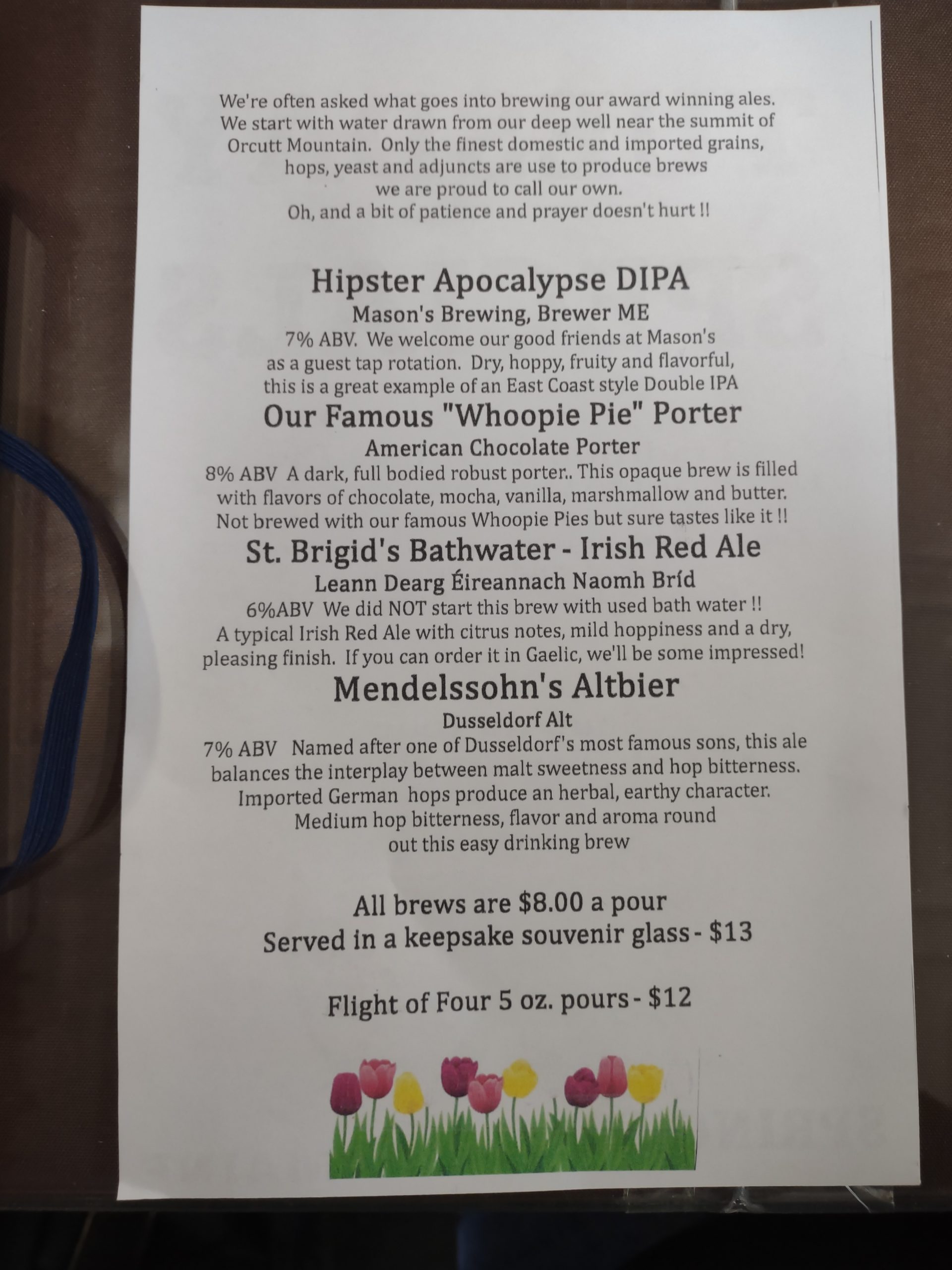
The Friar’s Brewhouse serves the “temporal needs” of three Anglican/ Franciscan brothers. They wear brown habits and bear the brunt of all the usual tourist questions and comments. They bake the bread and brew the ales sold in the Brewhouse. Debbi had a lobster roll, and I their other specialty, the Banh Mi sandwich. Food was great, the Irish Red ale was wonderfully cloudy and delicious. Unfortunately, the beer is only sold from the tap, so no way to bring away some for later.

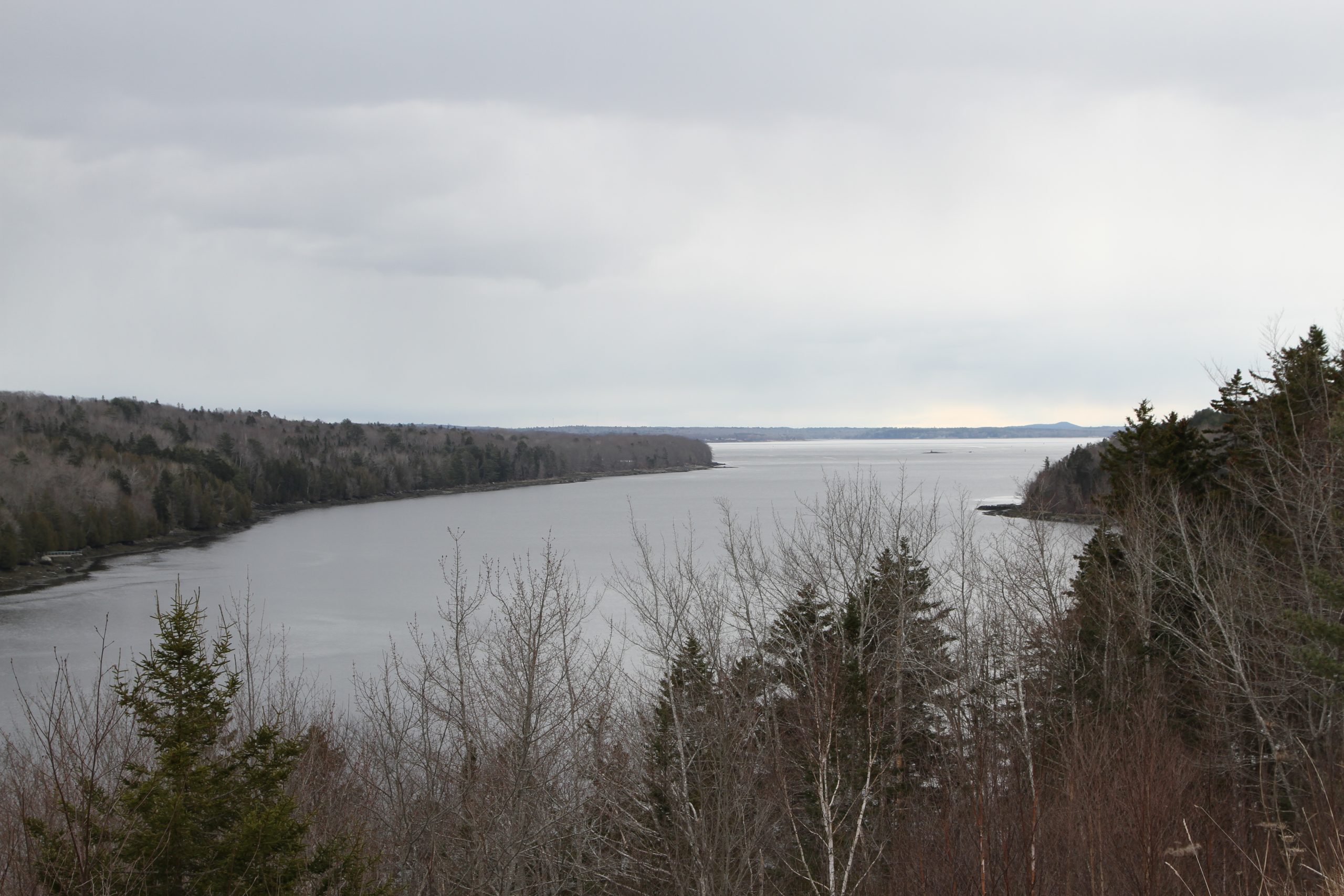
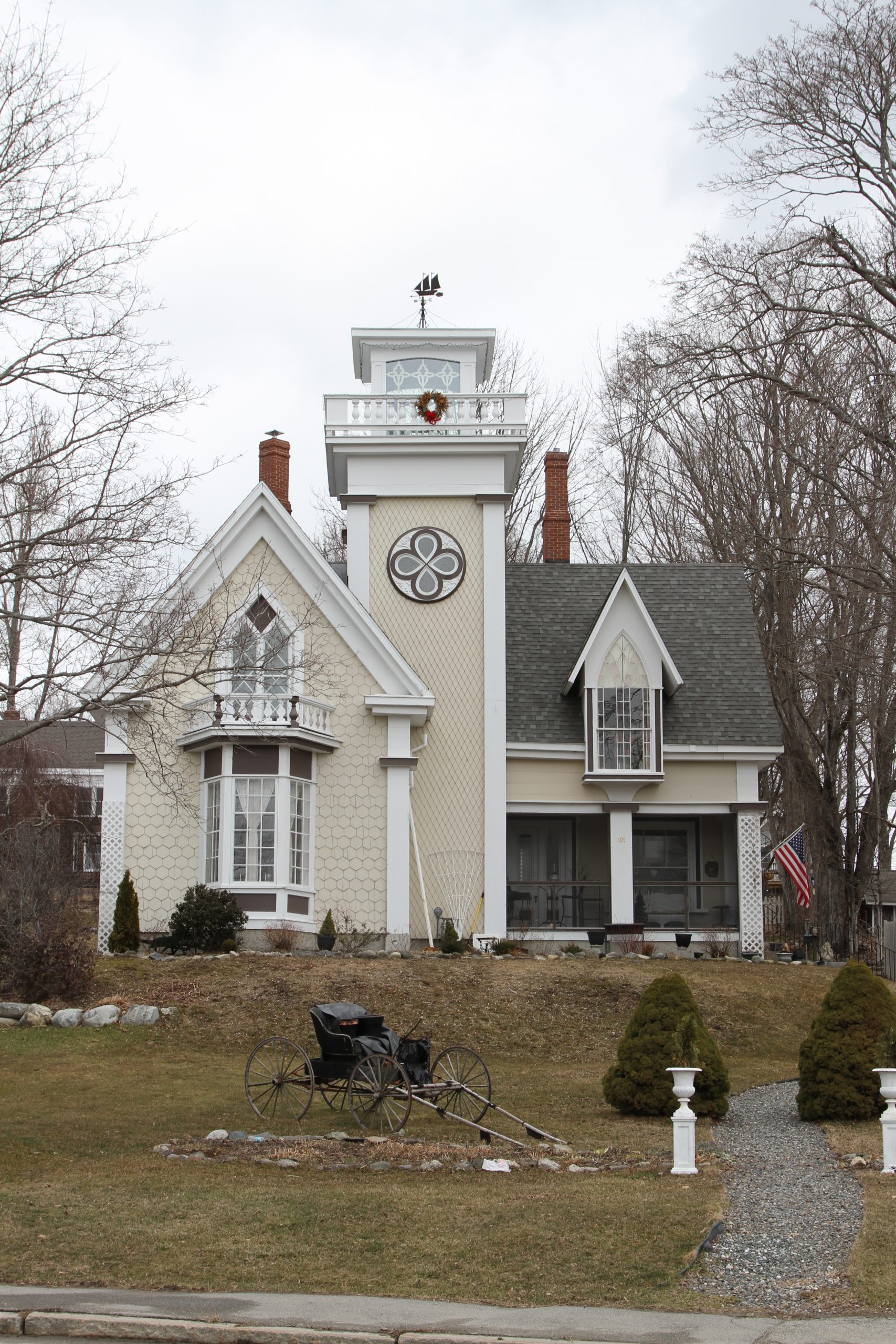
We drove some of the back streets and saw some beautiful old houses. The town was built on fishing, shipbuilding and lumber, and saw its heyday many decades ago. The Penobscot River and the town were the site of an American naval defeat in 1779.